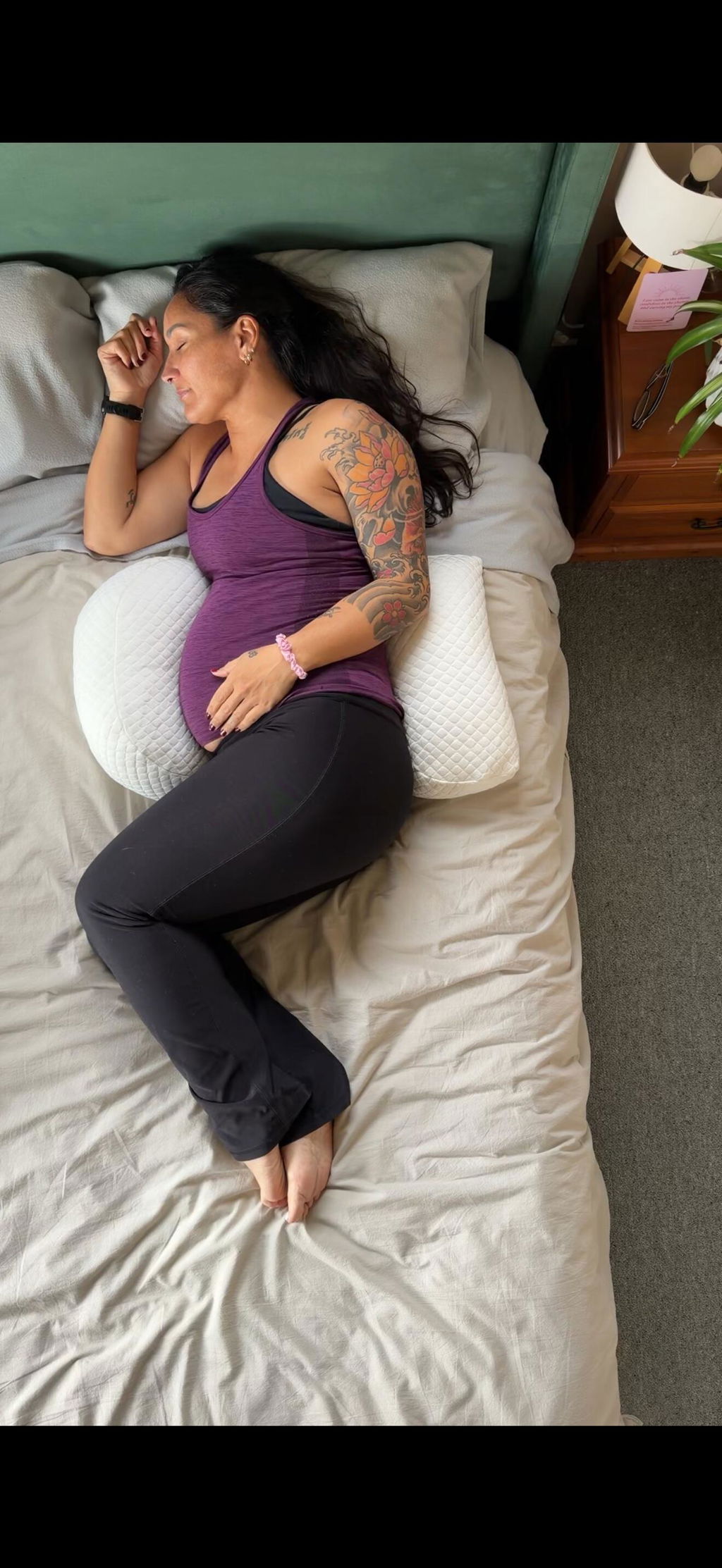


Pregnancy tiredness can be strange because you can have a full night's sleep and still wake up feeling like you could go straight back to bed.
I remember being surprised by just how tired pregnancy could make me. It wasn't always the kind of tiredness that disappeared after a good night's sleep either. Sometimes it felt like my entire body was asking me to slow down.
And then there was the guilt.
I felt like I should still be getting things done. The house needed cleaning, dinner needed making, work needed doing and there was always something else on the list.
Looking back, I wish I'd understood earlier that pregnancy tiredness isn't something you necessarily need to push through.
Your body is doing a huge amount of work.
Why are you so tired during pregnancy?
There's a good reason pregnancy can leave you feeling completely exhausted.
Your body is constantly changing to support your growing baby. Your blood volume increases, your heart works harder, your hormones change and your body is building the placenta and supporting your baby's development.
All of that requires energy.
And that's before you factor in the everyday things that make pregnancy more tiring.
You might be:
- Waking up several times during the night
- Getting up to use the bathroom
- Struggling to get comfortable
- Dealing with hip, back or pelvic discomfort
- Experiencing heartburn or nausea
- Carrying more weight than you're used to
- Feeling emotionally overwhelmed
- Trying to keep up with work, family and everyday life
So if you're exhausted, there's a lot going on behind the scenes.

Does pregnancy tiredness get better?
Many women experience significant fatigue during the first trimester, partly because of hormonal changes.
For some, energy starts to return during the second trimester.
Then the third trimester can bring another wave of tiredness as your bump grows, sleep becomes more difficult and your body is carrying more physical weight.
But every pregnancy is different.
You might feel surprisingly energetic at 30 weeks, while someone else might be counting down to bedtime by lunchtime.
There's no single "normal" level of pregnancy tiredness.
First trimester tiredness
The first trimester can be particularly exhausting.
You may look completely fine from the outside, but internally your body is working incredibly hard.
And if you're dealing with morning sickness, food aversions or struggling to eat normally, that can make the whole experience even harder.
One of the biggest mistakes I made was thinking I should be able to continue doing everything at the same pace.
If your body is asking for rest, listen to it.
You don't have to wait until you're completely exhausted before taking a break.
Second trimester energy
For many women, the second trimester brings a welcome improvement in energy.
You may find yourself feeling more like yourself again.
If that happens, enjoy it, but don't feel like you need to suddenly catch up on everything you've neglected.
It's tempting to use that burst of energy to clean the entire house, organise the nursery, work extra hours and prepare for the baby all at once.
You don't have to.
Save some energy for yourself too.
Third trimester exhaustion
The third trimester can be a different kind of tired.
Your body is carrying a much bigger bump, your sleep may be broken and everyday tasks can suddenly require much more effort.
Things you never thought twice about can become exhausting.
Getting dressed.
Putting your shoes on.
Standing in the kitchen.
Getting out of the car.
Rolling over in bed.
Even getting comfortable on the sofa can feel like a project.
And if you're waking several times during the night, it's no wonder you're tired during the day.
What can actually help pregnancy fatigue?
Unfortunately, there's no magic solution.
But there are some things that genuinely helped me.
1. Stop treating rest like something you have to earn
This is probably the biggest one.
You don't need to finish everything on your to-do list before you're allowed to sit down.
If you're tired, rest.
The washing will still be there later.
The house doesn't need to be perfect.
And dinner doesn't have to be impressive every night.
Growing a baby is productive enough.
2. Protect your sleep
If you're struggling to sleep at night, look at what you can make easier.
Make your bedroom comfortable and cool.
Keep your evening routine simple.
Try to go to bed when you're actually tired rather than staying up because you feel like you should be getting things done.
And if your bump, hips or back are making it difficult to get comfortable, experiment with additional support.
A pillow between your knees, something underneath your bump or support behind your back can make side sleeping more comfortable.
For me, this became particularly important later in pregnancy.
3. Eat regularly
Pregnancy isn't the time to ignore hunger because you're too busy.
Having regular meals and snacks can help you avoid those moments where you suddenly feel completely wiped out.
Keep easy snacks within reach for days when cooking feels like too much effort.
Fruit, yoghurt, toast, nuts or whatever you can tolerate are all fine.
It doesn't have to be complicated.
4. Keep moving but don't overdo it
Gentle movement can be helpful when you're feeling tired and stiff.
That might mean a short walk, some gentle stretching or simply getting up regularly if you've been sitting for a while.
But you don't need to force yourself through a big workout because you feel like you "should" be exercising.
Some days a walk around the block will feel great.
Other days your body might be asking for the sofa.
Listen to it.
If you're unsure what exercise is appropriate during your pregnancy, speak with your midwife or healthcare provider.
5. Accept help
This one took me a while to learn.
If someone offers to make dinner, look after your other children, pick something up from the shops or help around the house, you don't have to automatically say no.
Let them help.
Pregnancy can be a lot to manage, particularly if you already have children, work or other responsibilities.
You don't get extra points for doing everything yourself.
6. Make everyday tasks easier
You don't realise how much energy you're using on little things until you're pregnant.
If standing for long periods makes you tired, sit down while you do things where possible.
If bending down is becoming difficult, keep things you use regularly somewhere easier to reach.
If your feet are sore, wear comfortable shoes rather than trying to squeeze into something that no longer feels good.
Small changes add up.
7. Make yourself comfortable
This sounds obvious, but comfort can make a huge difference to how exhausted you feel.
If your clothes are tight and uncomfortable, buy maternity clothes.
If your back is aching, find some support.
If your hips hurt when you're sleeping, try a pillow between your knees.
If your bump feels heavy, support it.
You don't have to wait until you're really uncomfortable before doing something about it.

What if you're tired but can't sleep?
This is one of the most frustrating parts of pregnancy.
You can be absolutely exhausted but still struggle to sleep.
Maybe your hips hurt.
Maybe your baby is moving.
Maybe you need the bathroom again.
Maybe you've been lying there for 30 minutes trying to find a comfortable position.
If that's happening regularly, look at your sleep setup.
Try supporting your bump and legs and giving your back somewhere to rest.
A pregnancy pillow can be useful here because it can provide support in several places at once, rather than having to constantly rearrange individual pillows.
But you don't necessarily need one.
Use whatever helps you feel comfortable.
Frequently asked questions
Is it normal to be extremely tired during pregnancy?
Yes, fatigue is very common during pregnancy, particularly in the first and third trimesters. However, severe, sudden or unusual fatigue should be discussed with your healthcare provider.
What trimester are you most tired in?
Many women experience significant tiredness during the first trimester. Energy may improve during the second trimester before tiredness returns for some women in the third trimester.
Why am I so tired even after sleeping?
Pregnancy itself requires a lot of energy, and your sleep may also be less restorative because of frequent waking, discomfort, bathroom trips, reflux or other pregnancy symptoms.
How can I get more energy during pregnancy?
Prioritise sleep and rest, eat regularly, stay hydrated, include gentle movement if it feels good and accept help when you need it. Don't feel like you need to maintain your pre-pregnancy pace.
Is it okay to nap while pregnant?
Absolutely. If you're tired and have the opportunity to rest, a nap can be a useful way to recharge. If you're struggling to sleep at night, however, very long or late naps may make nighttime sleep harder.
When should I worry about pregnancy fatigue?
If your fatigue is severe, sudden, getting worse or feels different from the tiredness you've experienced previously, talk to your midwife or doctor. They can decide whether you need further assessment.
The thing I'd tell another pregnant mum
You don't have to keep doing everything at the same pace just because you could before pregnancy.
Your body has changed.
Your energy has changed.
Your priorities can change too.
There will be days when you feel productive and days when getting dressed feels like enough.
Both are okay.
Pregnancy isn't a test of how much you can accomplish while growing a baby.
So rest when you need to. Ask for help. Make things easier. Buy the comfortable clothes. Take the nap.
And if you're lying in bed at 3am wondering why you're exhausted but can't sleep, know that you're certainly not the only one.
Sometimes pregnancy is less about finding the perfect routine and more about learning to give yourself a bit of grace.