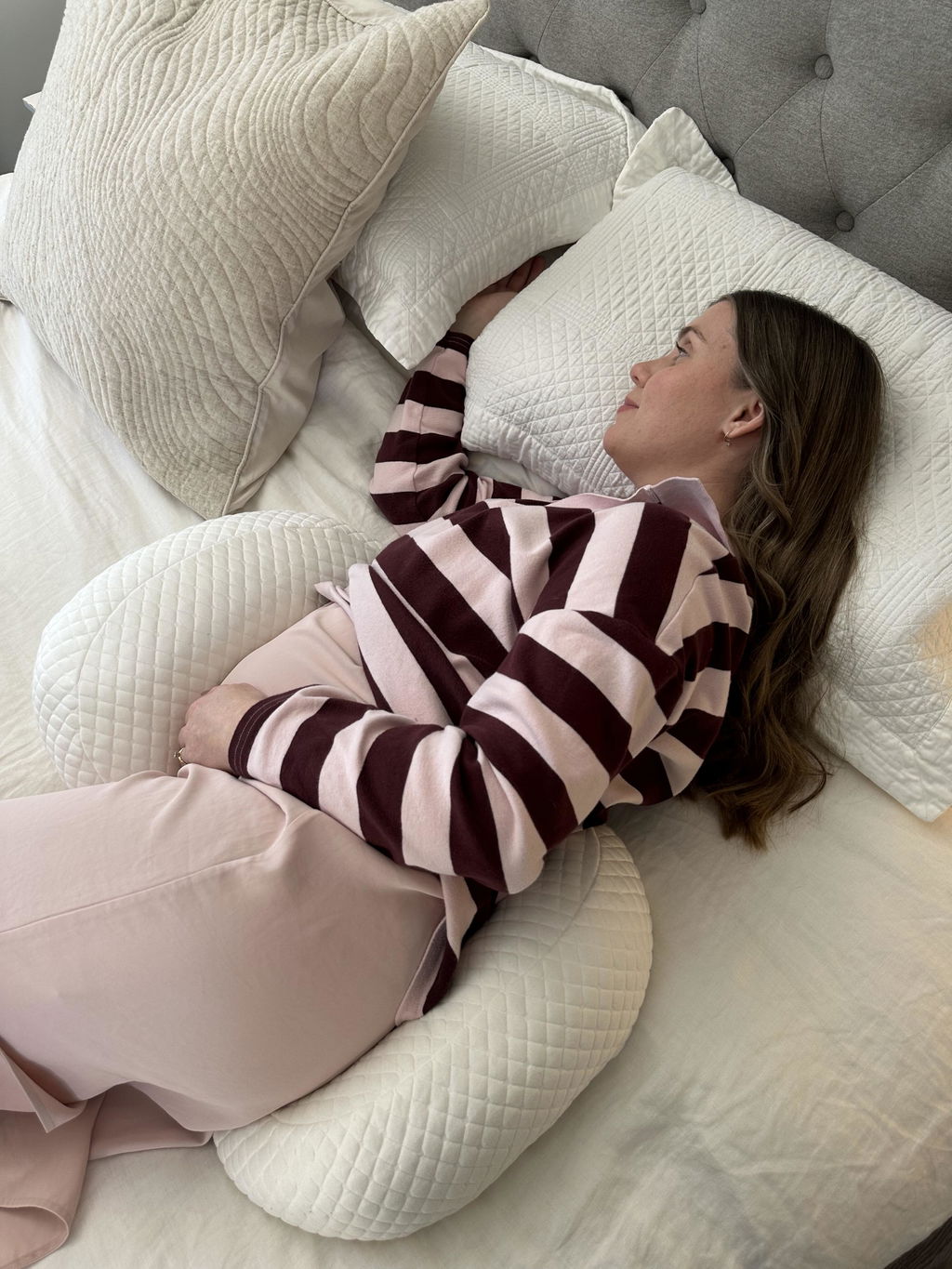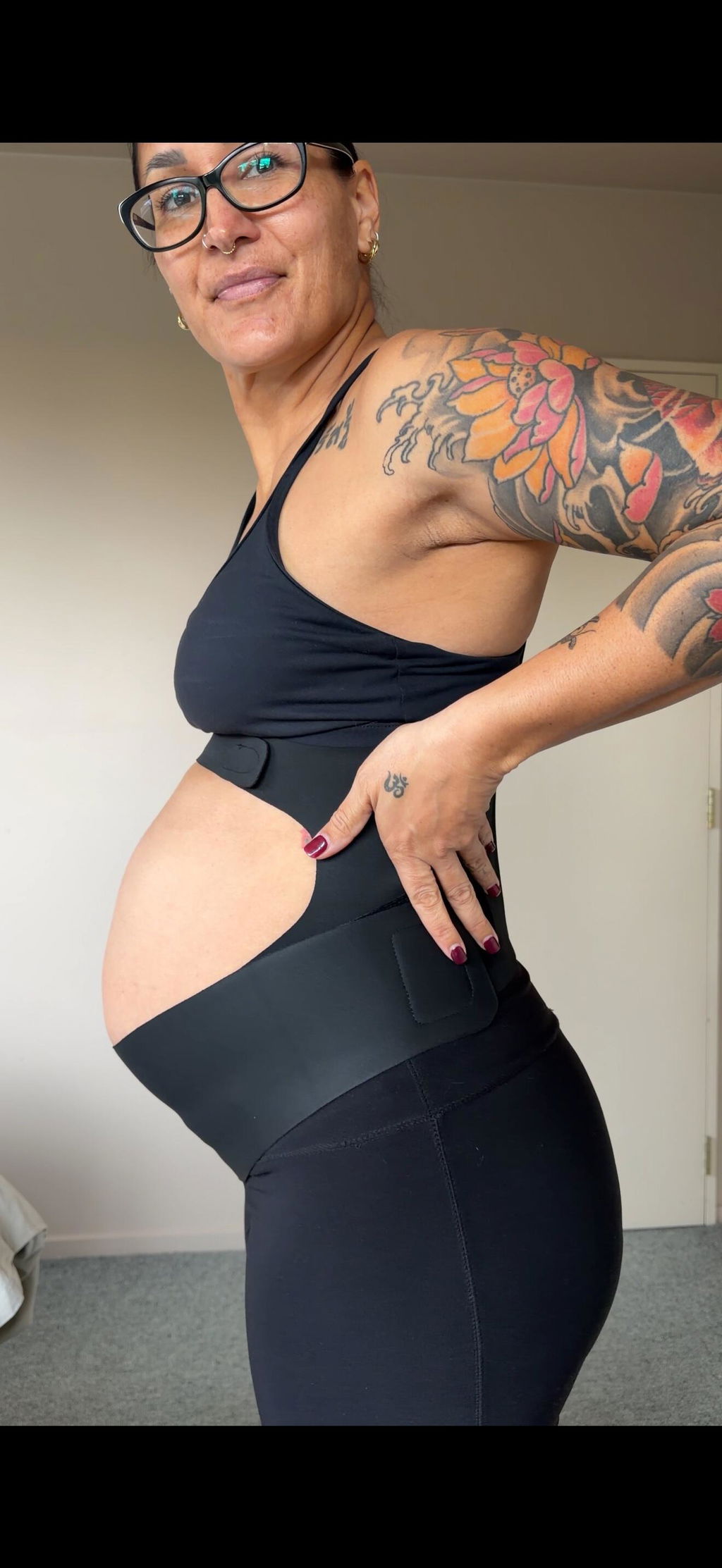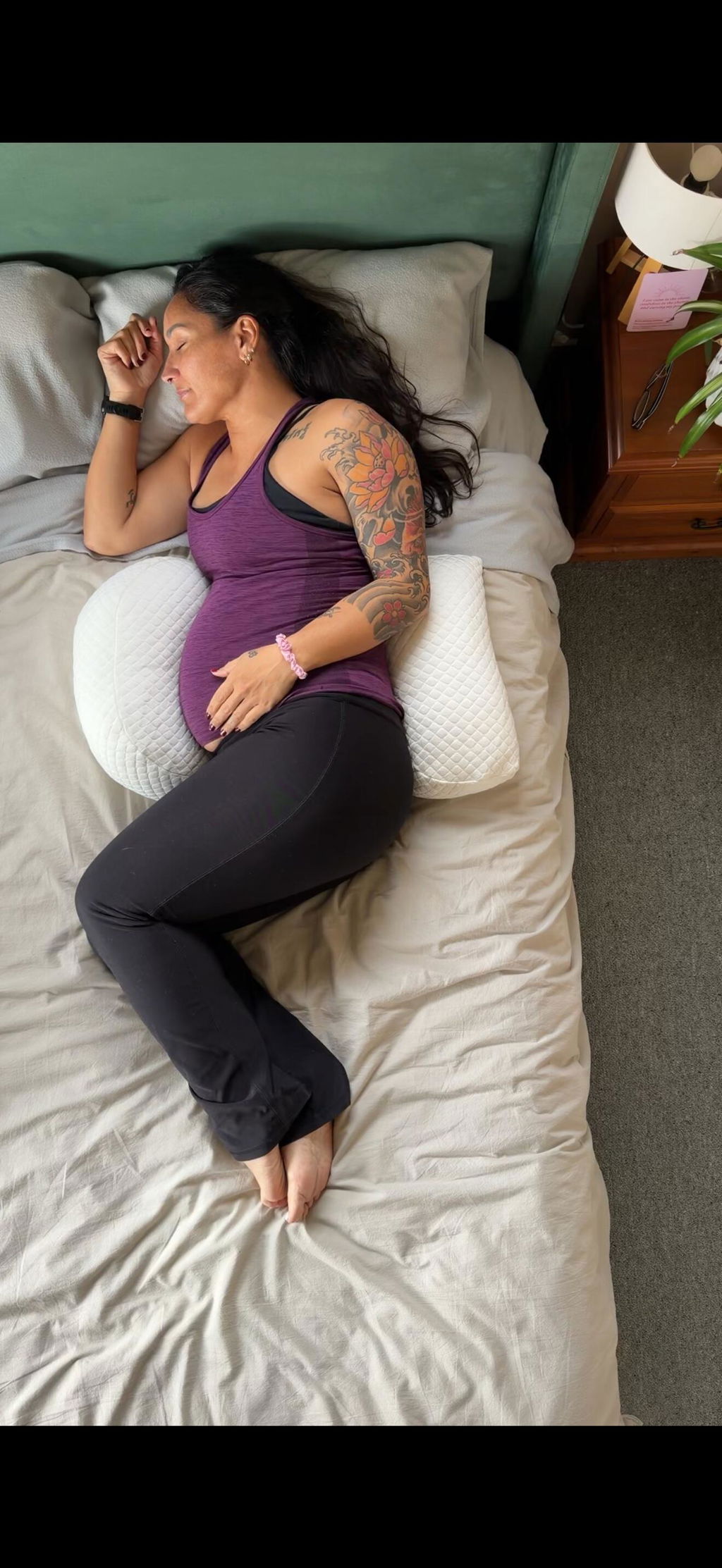


If you're pregnant and starting to wonder whether it's time for a belly band, you might also be wondering: what week am I supposed to start wearing one?
The short answer is: there isn't a magic week.
Some women start wearing a pregnancy support band in the second trimester when their bump starts feeling heavier. Others don't feel like they need one until the third trimester. And some never need one at all.
It's less about how many weeks pregnant you are and more about how your body is feeling and what you're doing day to day.
So, when should you start wearing a belly band?
For many women, a belly band starts becoming useful somewhere around the second trimester, as the bump gets bigger and heavier.
But you don't need to wait until a certain number of weeks.
If you're starting to notice that your bump feels heavy when you're walking, your lower back gets tired after standing, or you're feeling more pressure through your hips and pelvis, a support band may be worth trying.
The important thing is that it should feel supportive, not restrictive.
A maternity support belt is generally designed to be worn during activities such as standing or walking rather than all day or while sleeping. If you're using one because of pelvic girdle pain, a physiotherapist or other maternity healthcare professional can help you work out whether it's suitable for you.
Can you wear a belly band in the first trimester?
You can, but you may not feel like you need one yet.
In the first trimester, your bump is usually still relatively small, so there often isn't the same weight or pressure through your back, hips and pelvis that you might notice later on.
That doesn't mean there's a rule against wearing one early in pregnancy. If you find a support band comfortable and it gives you the support you're looking for, you don't necessarily need to wait until your bump reaches a certain size.
For most women, though, the question tends to come up later when the bump starts getting heavier.
What about the second trimester?
This is often when a belly band starts making more sense.
Your bump is growing, you're carrying more weight at the front of your body and you may be spending more time on your feet.
You might notice things like:
- Your lower back getting tired after standing
- Your bump feeling heavy when you're walking
- More pressure through your hips or pelvis
- Everyday activities becoming a little harder
- Walking for longer periods becoming uncomfortable
- Feeling like you could use a little extra support underneath your bump
This was actually when I started paying more attention to how much my bump was affecting everyday things.
I didn't think I'd need a belly band until I reached the point where even a trip to the supermarket felt like hard work.
Wearing a pregnancy support belt gave my bump a little lift and made being on my feet more comfortable. I didn't wear it every day, but on the days I needed it, I was always glad I had it.
Do you need a belly band in the third trimester?
Not necessarily, but this is when many women notice that their bump is getting significantly heavier.
By the third trimester, things like walking, standing for long periods and getting through a busy day can feel very different from earlier in pregnancy.
A support band can be useful when you're doing activities where you notice the weight of your bump more.
You might find it particularly helpful for:
- Going for a walk
- Shopping
- Standing for long periods
- Doing things around the house
- Working on your feet
- Days when your lower back, hips or pelvis feel more tired
If you're experiencing pelvic girdle pain, support belts are one of the options that may be recommended alongside other strategies such as physiotherapy, activity modification and exercises.

How do you know if you actually need one?
There's no pregnancy checklist that says: 20 weeks = buy a belly band.
Instead, think about how your body feels.
If you're comfortable walking around, standing and getting through your normal day, you may not need one.
If you're starting to think, “My bump is getting really heavy,” or “Why does standing for 20 minutes suddenly feel exhausting?”, it might be worth trying one.
You can also try gently supporting the underside of your bump with your hands while you're standing or walking. If that feels noticeably more comfortable, a support belt may be worth exploring. Some physiotherapy guidance uses this as a simple way to see whether external support may be helpful.
Can you wear a belly band all day?
I'd avoid thinking of a belly band as something you need to wear from morning until night.
They're generally most useful when you're up and moving, particularly if that's when you notice the most discomfort.
If you're sitting for a long period, you may find it more comfortable to loosen or remove it. You also shouldn't need to wear a pregnancy support belt while sleeping.
The goal is support, not squeezing your bump into place.
If it feels uncomfortable, restrictive, causes pain or makes you feel worse, take it off.
What does a belly band actually help with?
The main purpose of a pregnancy support band is to give your growing bump some extra support from underneath.
As your bump gets bigger, you may notice that certain activities become more uncomfortable, particularly when you're standing or walking for longer periods.
A belly band may help make things feel more comfortable if you're experiencing:
-
A heavy feeling bump
-
Lower back discomfort
-
Pressure or discomfort around your hips
-
Pelvic discomfort
-
Feeling tired through your lower back after standing
-
Discomfort when walking or being on your feet
-
General strain from carrying a growing bump
For me, I didn't think I'd need one until I reached the point where even a trip to the supermarket felt like hard work.
Wearing a pregnancy support belt gave my bump a little lift and made being on my feet more comfortable. I didn't wear it every day, but on the days I needed it, I was always glad I had it.

What if I'm having pelvic or back pain?
This is where it's worth getting some proper advice rather than simply buying a belt and hoping for the best.
Pelvic girdle pain can cause pain around the pubic bone, hips, lower back or pelvis and can make things like walking, stairs, getting dressed or turning over in bed difficult. Getting help early can make it easier to manage.
A support belt may be part of the solution for some women, but it isn't the only option and it won't be right for everyone.
If pain is making it difficult to move around, affecting your sleep or stopping you from doing your normal activities, talk to your midwife, GP or a pregnancy/pelvic health physiotherapist.
So, what week should you start wearing a belly band?
Whenever you feel you need the extra support.
For some women, that might be around 20 weeks. For others, it might be closer to 30 weeks. Some may find they want one even earlier, while others won't need one at all.
There's no prize for waiting until your bump is really uncomfortable before doing something about it.
If your growing bump is making walking, standing or everyday activities harder, a pregnancy support band could be worth trying.
And if you're not uncomfortable yet? You don't need to wear one just because you've reached a certain week.
Listen to your body and use it when it actually helps.