

Quick Summary – Here’s What You’ll Learn:
-
Why a pregnancy pillow can be a smart breastfeeding tool
-
Several safe, effective nursing positions using a pregnancy pillow
-
How to avoid common mistakes and keep feeding sessions comfortable
-
FAQs from experienced mums and lactation consultants
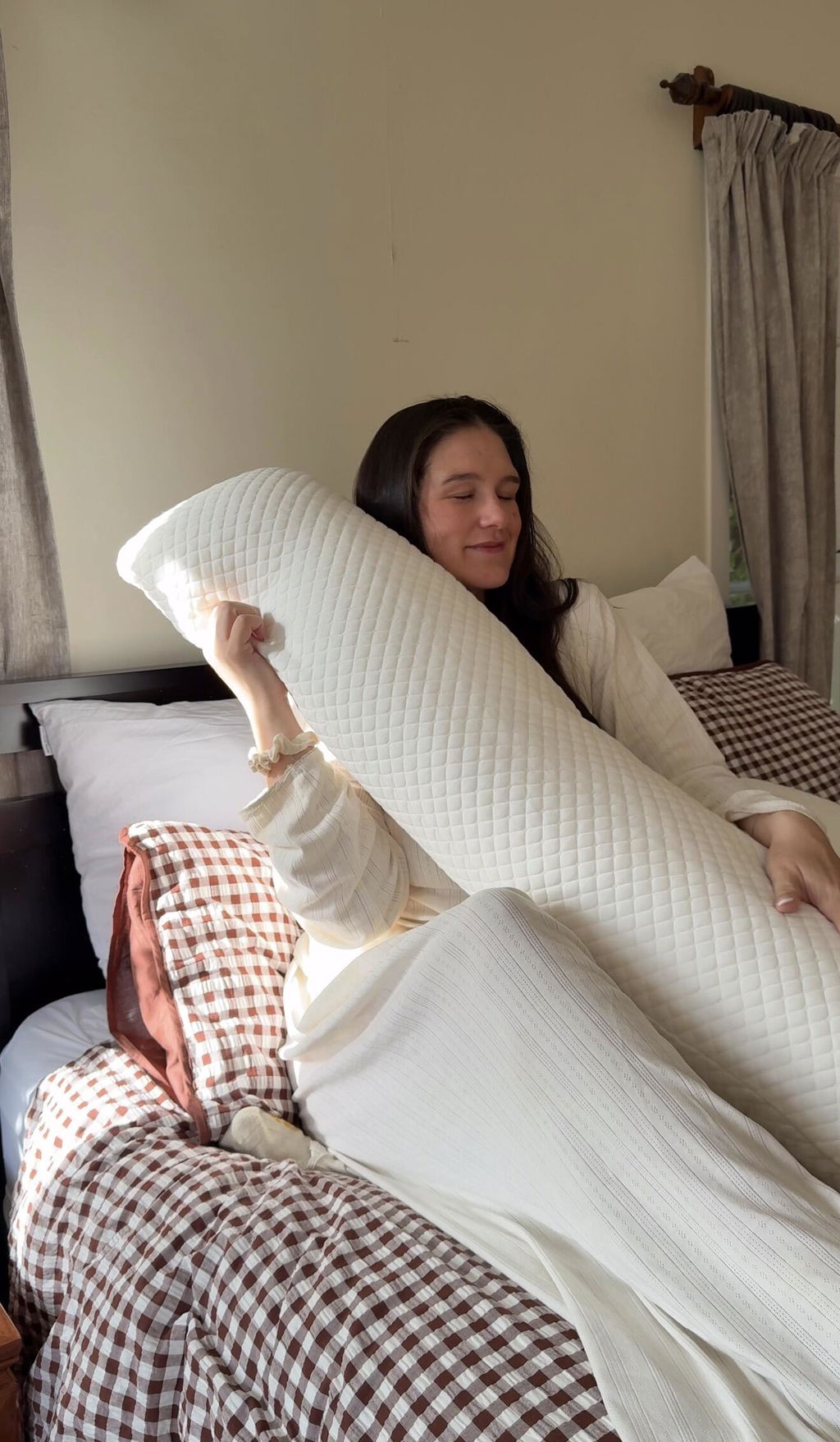
If you loved your pregnancy pillow during pregnancy, don't pack it away just because your baby has arrived.
One of the things I loved about having a pregnancy pillow was that it didn't suddenly become useless once I gave birth. I could keep using it to make feeding more comfortable, especially during those long feeds when you're sitting in the same position for what feels like forever.
As a second time mum, I quickly learnt that anything that made those early weeks a little easier was worth holding onto.
A pregnancy pillow isn't a replacement for a nursing pillow, and you don't necessarily need one for breastfeeding. But with the right setup, it can provide some really useful support for your back, arms and body while you're feeding.

Why use a pregnancy pillow for breastfeeding?
Feeding a newborn can mean spending a lot of time sitting in the same position.
In the early days, you might be feeding every couple of hours, and some feeds can feel surprisingly long. If you're holding your baby without any support, it's easy to end up with a sore neck, shoulders, arms or lower back.
A pregnancy pillow can give you somewhere to rest your arms or provide support behind your back while you concentrate on feeding your baby.
It can also help bring your baby to a more comfortable height, so you're not constantly leaning forward or lifting your shoulders to reach them.
The goal isn't to prop your baby up with a pillow and leave them there. You should always be holding and supervising your baby during a feed.
It's simply about making your position more comfortable.
1. Cross-cradle hold
The cross cradle hold can be particularly useful during the early days when you're still getting the hang of breastfeeding.
You can use your pregnancy pillow across your lap to support your arms while you hold your baby.
Try:
- Sitting somewhere with good back support.
- Placing the pillow across your lap.
- Positioning your baby across your body, tummy facing you.
- Using your arm and hand to support your baby's neck and shoulders.
- Bringing your baby towards your breast rather than leaning your body forward.
The pillow should support your arms and help you stay comfortable, but you should still be supporting your baby throughout the feed.
If you're having trouble with positioning or latch, a midwife or lactation consultant can help you find a setup that works for you and your baby.
2. Football hold
The football hold can be particularly comfortable after a Caesarean birth because your baby is positioned beside you rather than across your abdomen.
You can place your pregnancy pillow beside your body or underneath your arm to provide some extra support.
Try:
- Sitting upright with your back comfortably supported.
- Positioning your baby beside you with their legs pointing towards the back of the chair or sofa.
- Using the pillow to support your arm and baby's body.
- Keeping your baby's head and body aligned as you bring them towards your breast.
Every mum and baby combination is different, so don't worry if the first position you try isn't the one that works best.
3. Reclined breastfeeding
Sometimes the most comfortable position is simply leaning back and letting your body relax.
A pregnancy pillow can be useful behind your back or underneath your arms while you feed.
The important thing is that you're comfortable and awake, with your baby positioned safely against you.
This can be particularly nice during those early days when you're recovering from birth and spending a lot of time sitting.
4. Side-lying breastfeeding
Side lying can be a comfortable option, particularly for night feeds, once you've been shown how to position yourself and your baby safely.
You can use your pregnancy pillow to support your own back or between your knees, but don't place the pillow around or underneath your baby.
Keep your baby's face and airway clear and stay awake and alert during the feed.
Once the feed is finished, move your baby to their own safe sleep space rather than allowing them to sleep on the adult bed or on the pregnancy pillow.
If you're unsure about safe positioning for side-lying feeds, ask your midwife or lactation consultant to show you.
Don't forget about your own comfort
It's easy to focus completely on whether your baby is positioned correctly and forget about yourself.
But if you're going to be sitting there for 20, 30 or even 40 minutes, your body deserves some support too.
A few things that helped me were:
-
Support your lower back.
A small pillow (like the wedge pillow) behind your back can stop you from slouching forward and help with posture. -
Bring baby to you.
Try not to lean forward towards your baby for the entire feed. Supporting your arms can make it easier to bring your baby to a comfortable height. -
Relax your shoulders.
It's surprisingly easy to tense your shoulders while concentrating on a latch. -
Get comfortable before you start.
Have your water bottle, snacks, phone and anything else you might need nearby. Once you're settled, you might be there for a while.
Can a pregnancy pillow replace a nursing pillow?
It can, but it doesn't have to.
Some mums love a traditional nursing pillow because it's smaller and specifically designed to sit around your waist. Others prefer the versatility of a pregnancy pillow that can support different parts of their body.
There's no right answer.
If you already have a pregnancy pillow that you're comfortable with, it's worth experimenting with it before buying another pillow specifically for feeding.
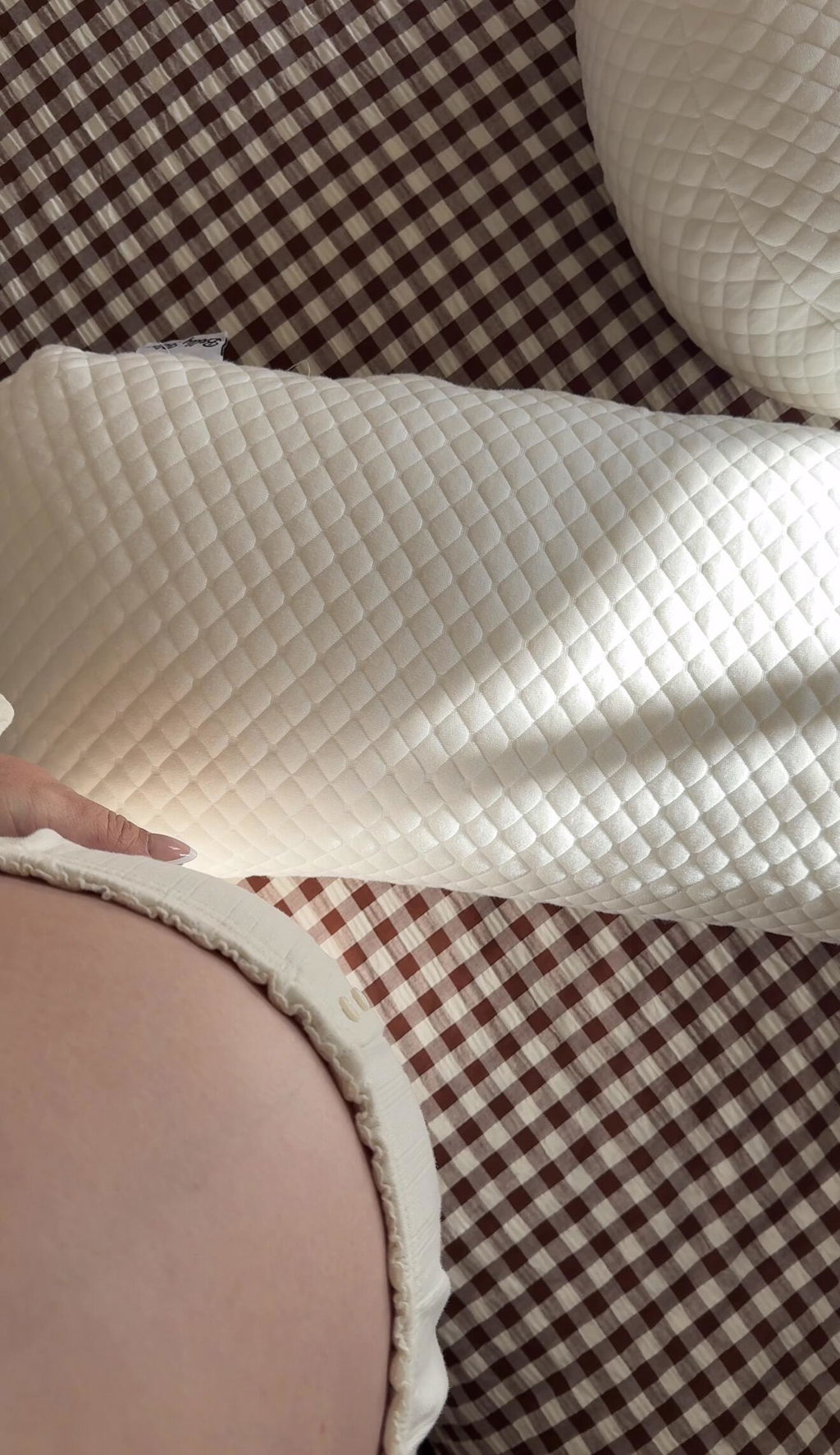
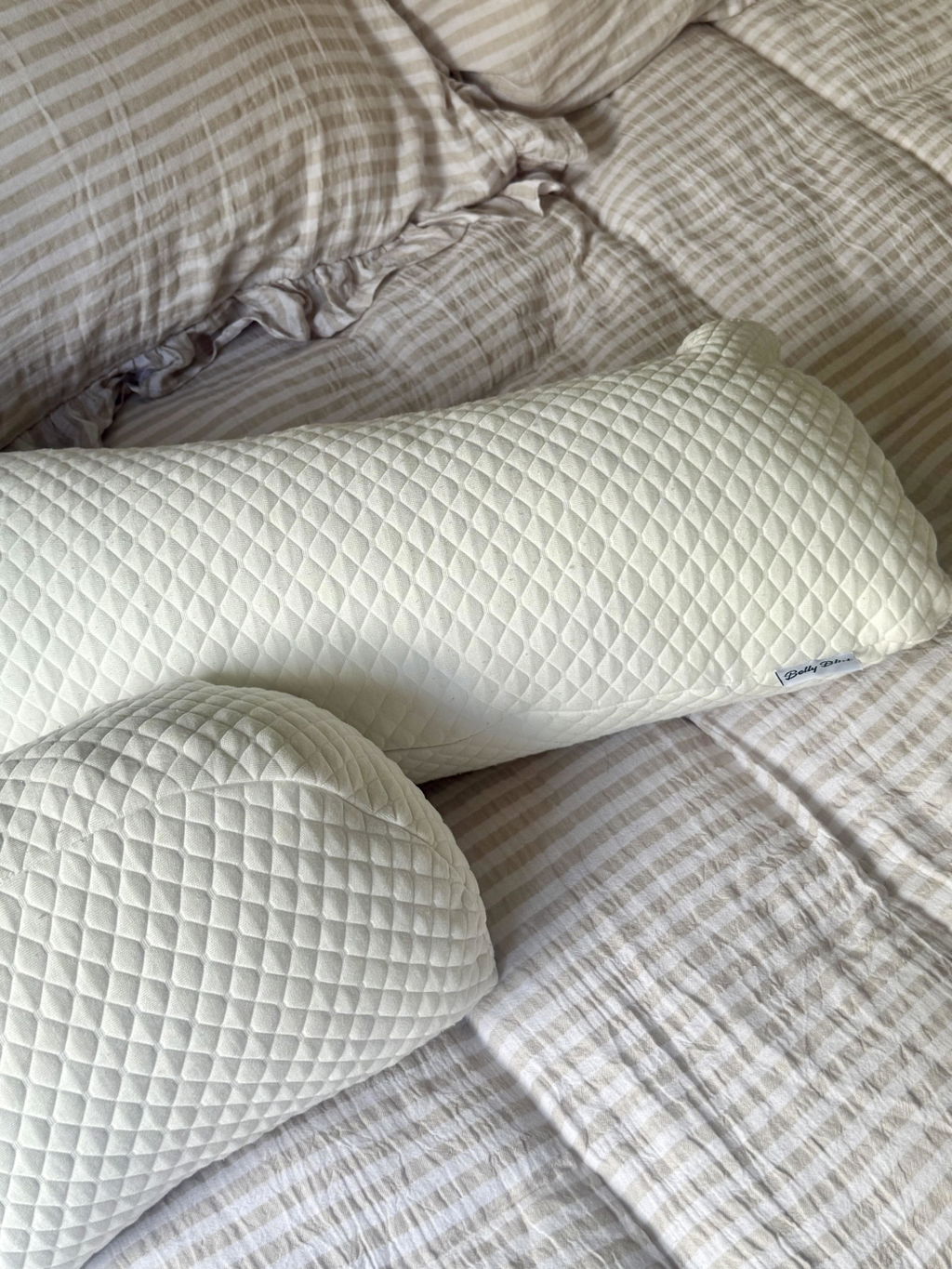
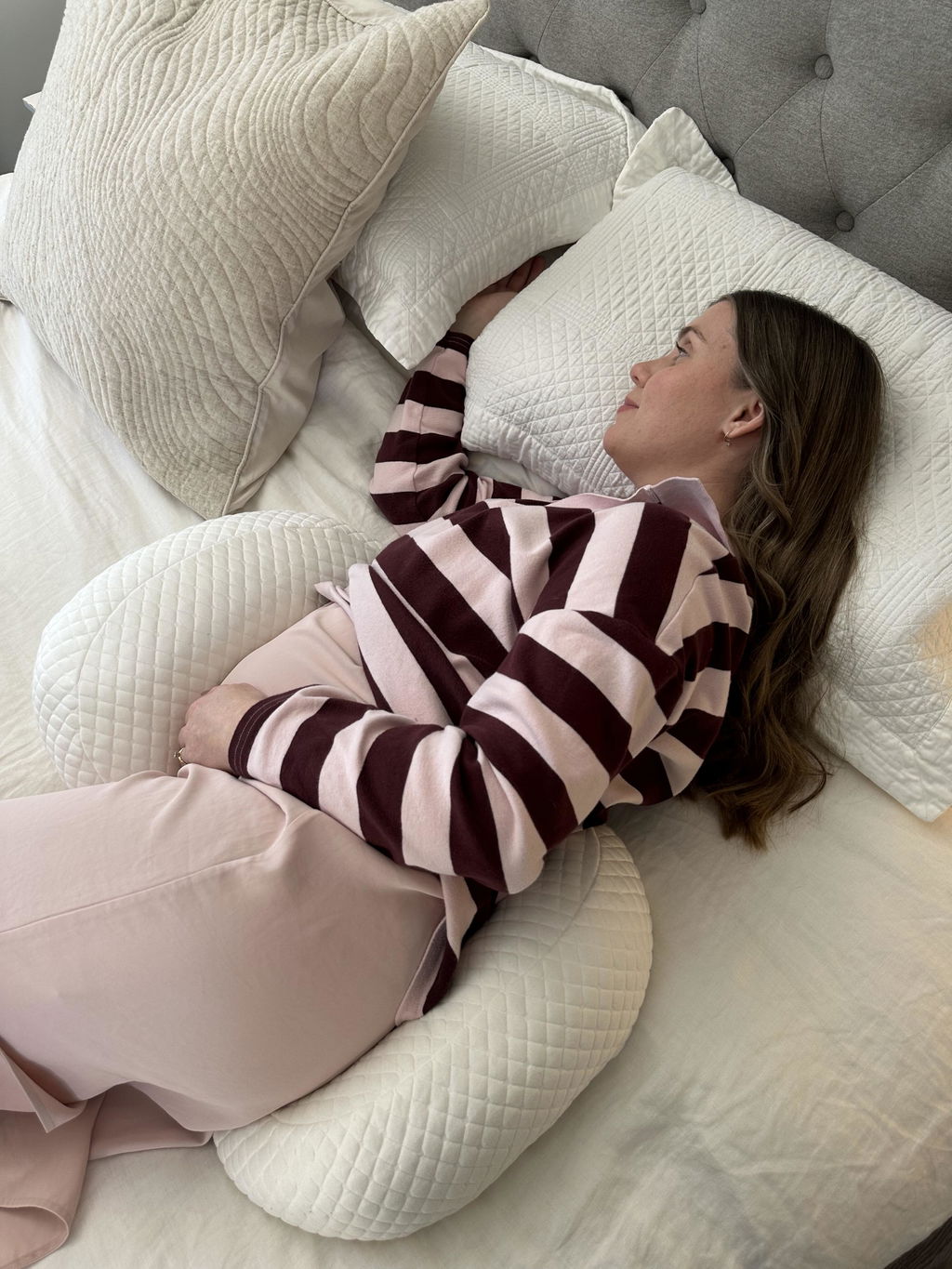
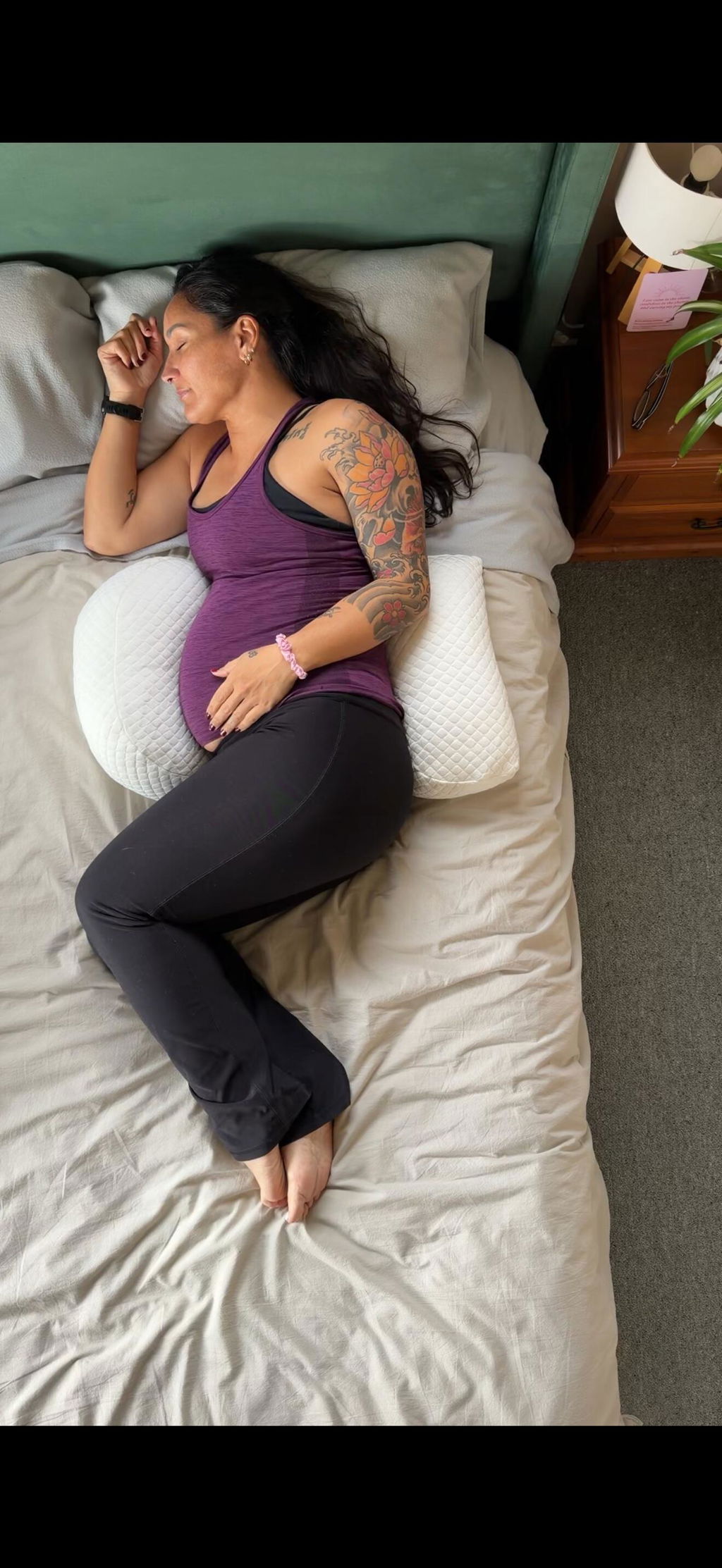
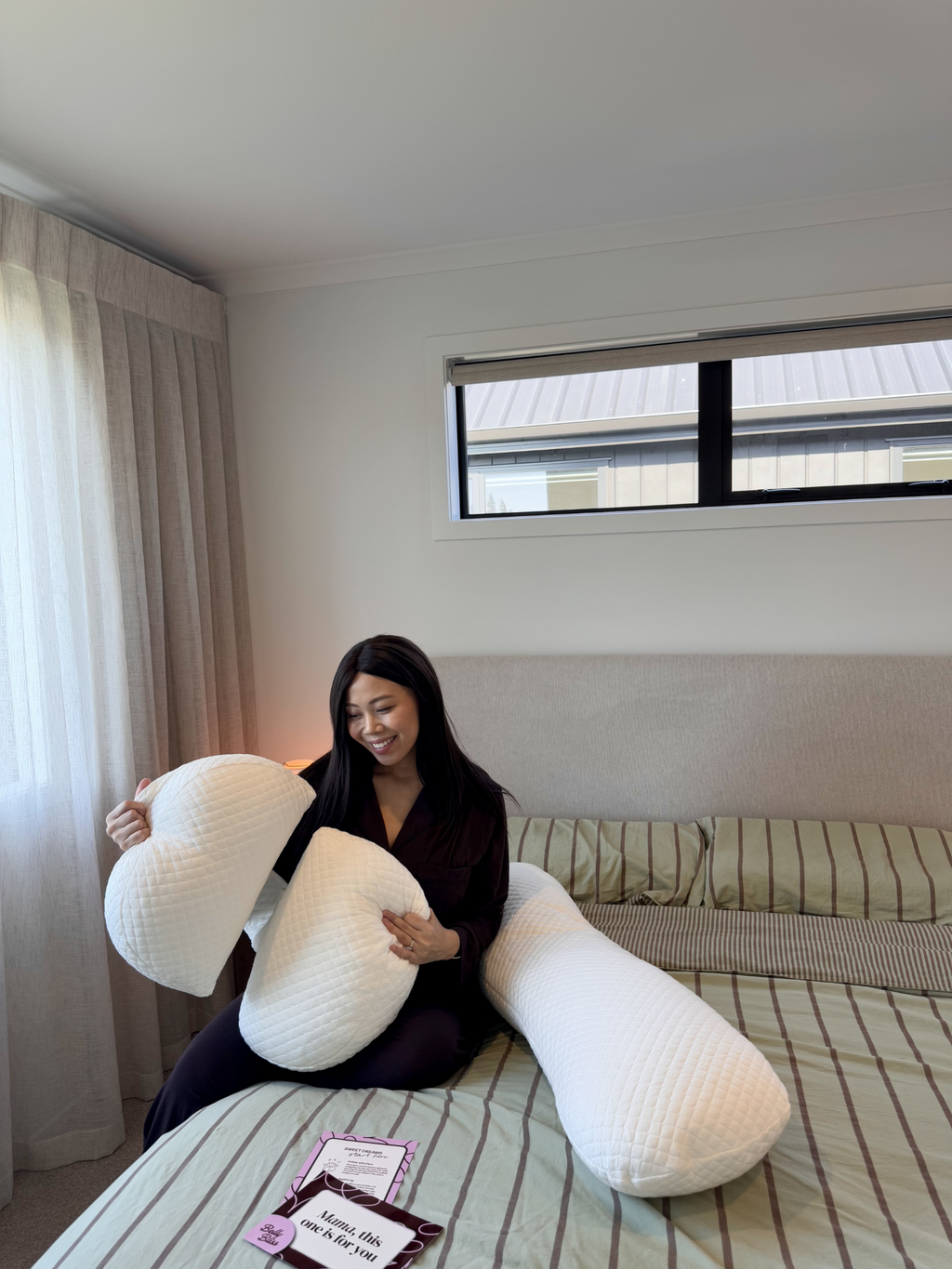
One of the things I loved about the Belly Bliss Pregnancy Pillow was being able to use it in different ways as my needs changed.
It supported me during pregnancy, and then I could keep using it once my baby arrived.

What else can you use it for after birth?
Breastfeeding isn't the only time you'll appreciate having some extra support.
A pregnancy pillow can also be useful for:
- Supporting your back while bottle feeding
- Getting comfortable during long newborn cuddles
- Supporting your body while resting
- Making night feeds a little more comfortable
- Giving your back and arms some extra support while feeding
Those early weeks can involve a lot of sitting, feeding and holding your baby.
Having something comfortable nearby can make those long stretches feel a little easier.
A note about safety
Pregnancy pillows are designed for supporting you, not as a sleep surface for your baby.
Never use a pregnancy pillow as a place to put your baby down to sleep, and don't leave your baby unattended on or around one.
During breastfeeding, make sure you're awake and able to supervise your baby. If you think you might fall asleep during a feed, it's important to follow safe sleep guidance and move your baby to their own safe sleep space as soon as you can.
If you're unsure about safe feeding or sleeping positions, your midwife or lactation consultant can talk you through them.
FAQs
Can I use my pregnancy pillow for breastfeeding?
Yes. Many mums find that a pregnancy pillow can provide useful support for their back, arms and body during breastfeeding. It isn't essential, but it can make longer feeding sessions more comfortable.
Is a pregnancy pillow better than a nursing pillow?
Not necessarily. They're designed for slightly different purposes, and what works best depends on you and your baby. A nursing pillow can be more compact, while a pregnancy pillow can offer support in more areas of your body.
Can I use a pregnancy pillow after a C-section?
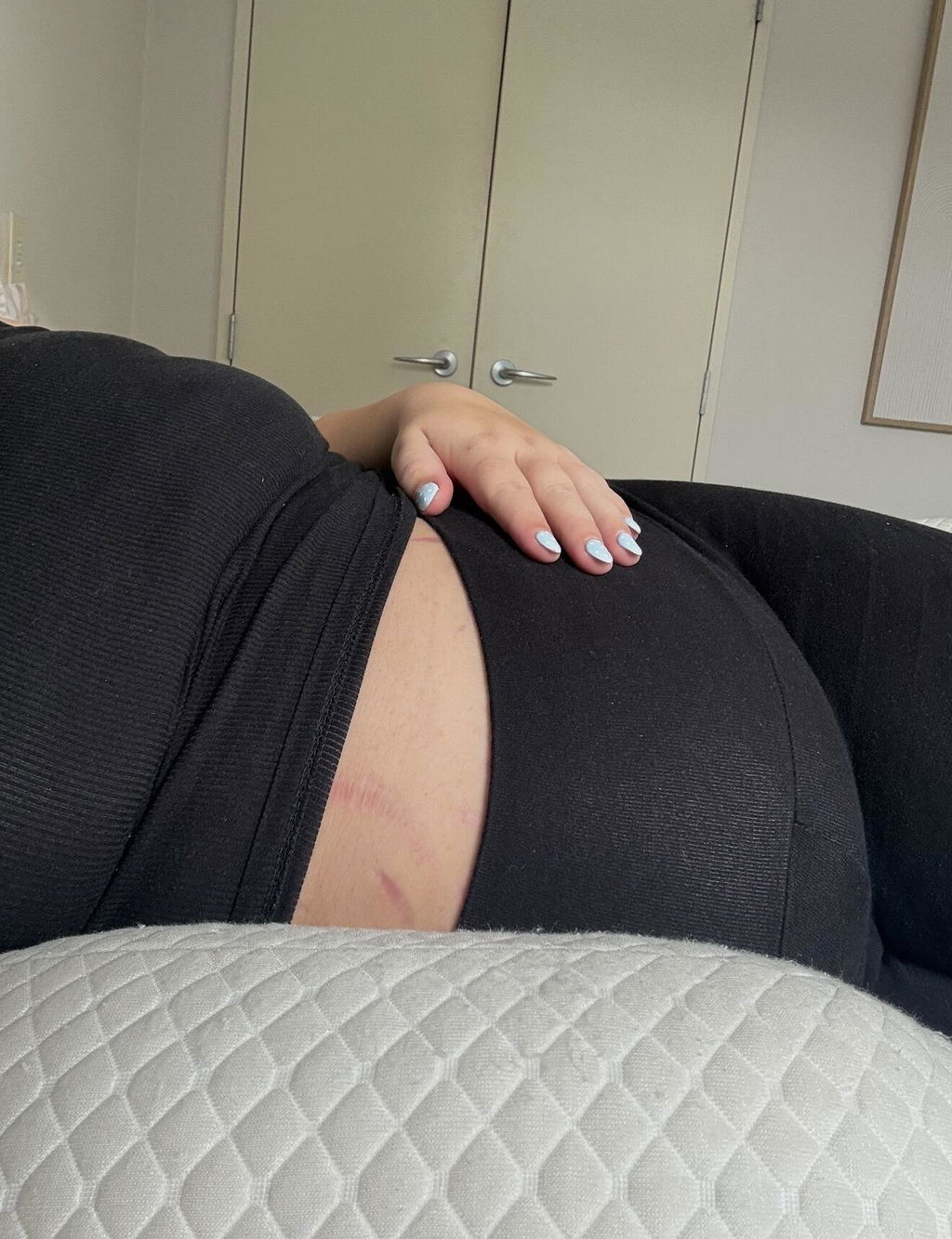
You can use a pregnancy pillow for your own comfort after a C-section, but take care to avoid putting unnecessary pressure on your incision. The football hold or a reclined position may be comfortable for some mums, but everyone's recovery is different. If you're unsure, ask your healthcare provider for personalised advice.
Can I use a pregnancy pillow for side-lying breastfeeding?
You can use it to support your own body, such as behind your back or between your knees. Avoid placing pillows around or underneath your baby, and never use a pregnancy pillow as a sleep surface.
How long can I use my pregnancy pillow after birth?
As long as you find it useful and comfortable. There's no specific point when you need to stop using it. You may find you use it less as your baby gets older and feeding becomes easier, but there's no reason it can't continue to be useful beyond the newborn stage.
Your pregnancy pillow doesn't have to retire after birth
One of the nice things about buying something during pregnancy that you can continue using afterwards is that it doesn't feel like a one season purchase.
For me, my pregnancy pillow was one of those things that stayed useful after my baby arrived. Feeding can be physically demanding, especially when you're doing it multiple times a day and night, so anything that helps you get into a comfortable position is worth considering.
You don't need a special pillow to breastfeed successfully. But if you already have a pregnancy pillow, try experimenting with it for your own support.
It might just become one of those things you continue reaching for long after pregnancy is over.