

Getting a good night's sleep can become surprisingly difficult during pregnancy.
You might be exhausted but unable to get comfortable. Your hips start aching, your bump feels heavy, you need to get up to use the bathroom for what feels like the hundredth time, and just when you've finally settled, you need to change position again.
I remember thinking that surely there had to be a better way to sleep.
The good news is that while pregnancy can make sleep more challenging, there are some simple things you can do to make yourself more comfortable.
Here's what I'd focus on.
What is the best sleeping position during pregnancy?
As pregnancy progresses, side sleeping is generally recommended, particularly from 28 weeks onwards.
The important thing to remember is that you don't need to force yourself to sleep on your left side all night.
Either side is fine.
You may have heard that sleeping on your left side is better for circulation, but the main advice later in pregnancy is to go to sleep on your side rather than flat on your back.
If you naturally prefer your right side, that's okay.
The biggest challenge for many women isn't choosing a side. It's making side sleeping comfortable enough to actually stay there.
And that's where support comes in.

Why does sleeping become so uncomfortable during pregnancy?
There isn't just one reason.
As your pregnancy progresses, several things are happening at once.
Your growing bump changes your centre of gravity. Your body is carrying more weight. Pregnancy hormones affect your joints and ligaments, and your hips, back and pelvis can start feeling the extra pressure.
Then there are all the other things that interrupt sleep:
- Needing to use the bathroom
- Heartburn or reflux
- A baby moving around
- Leg cramps
- Feeling hot
- Hip or pelvic discomfort
- Finding it difficult to turn over
So if you're lying in bed at 2am wondering why you're exhausted but can't get comfortable, you're definitely not the only one.
How to make side sleeping more comfortable
Once you've found a comfortable side, the next step is supporting your body.
You don't need to create some elaborate pillow fortress around yourself. A few well-placed pillows can be enough.
Support your bump
As your belly grows, it can feel heavy when you're lying on your side.
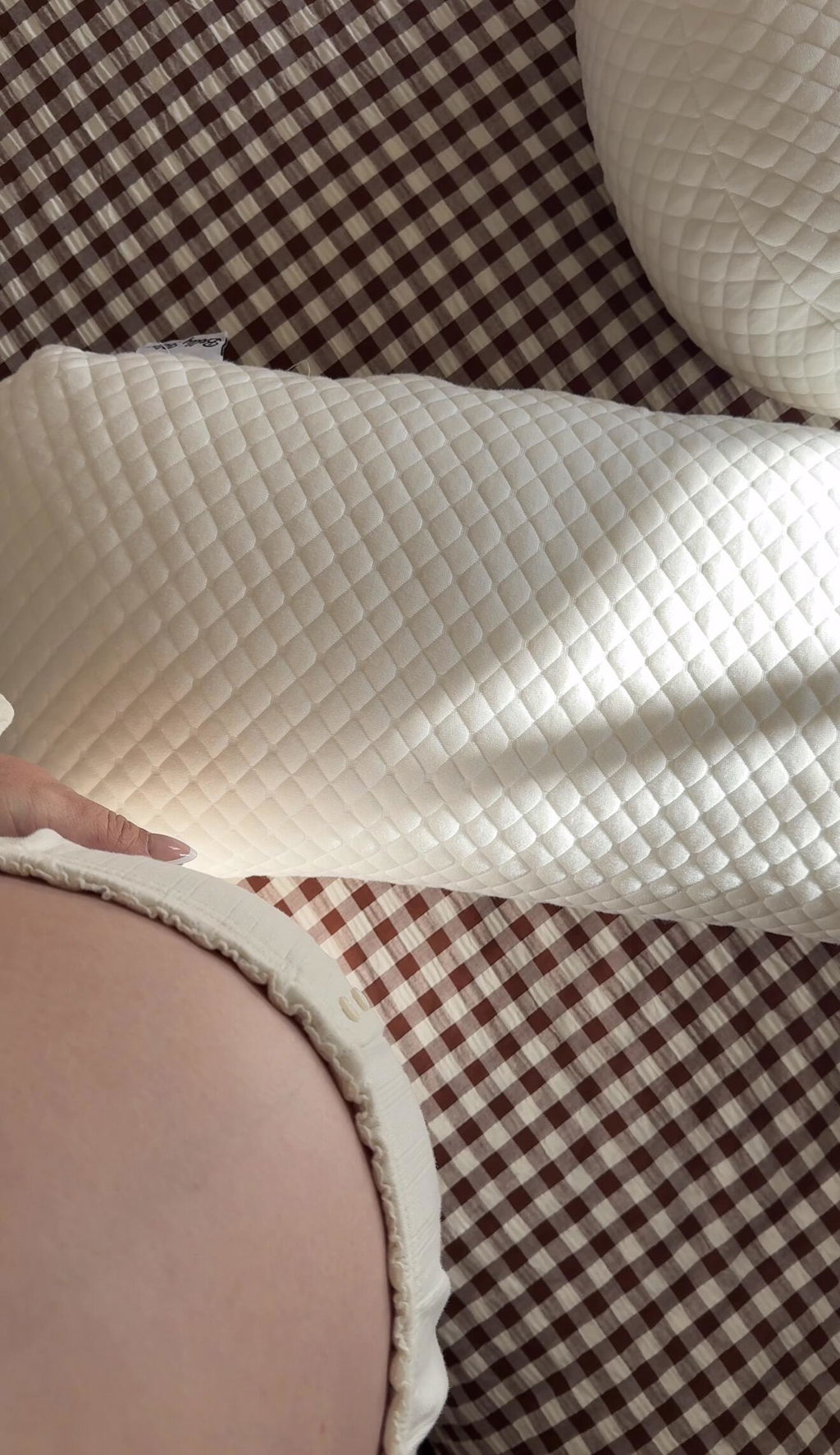
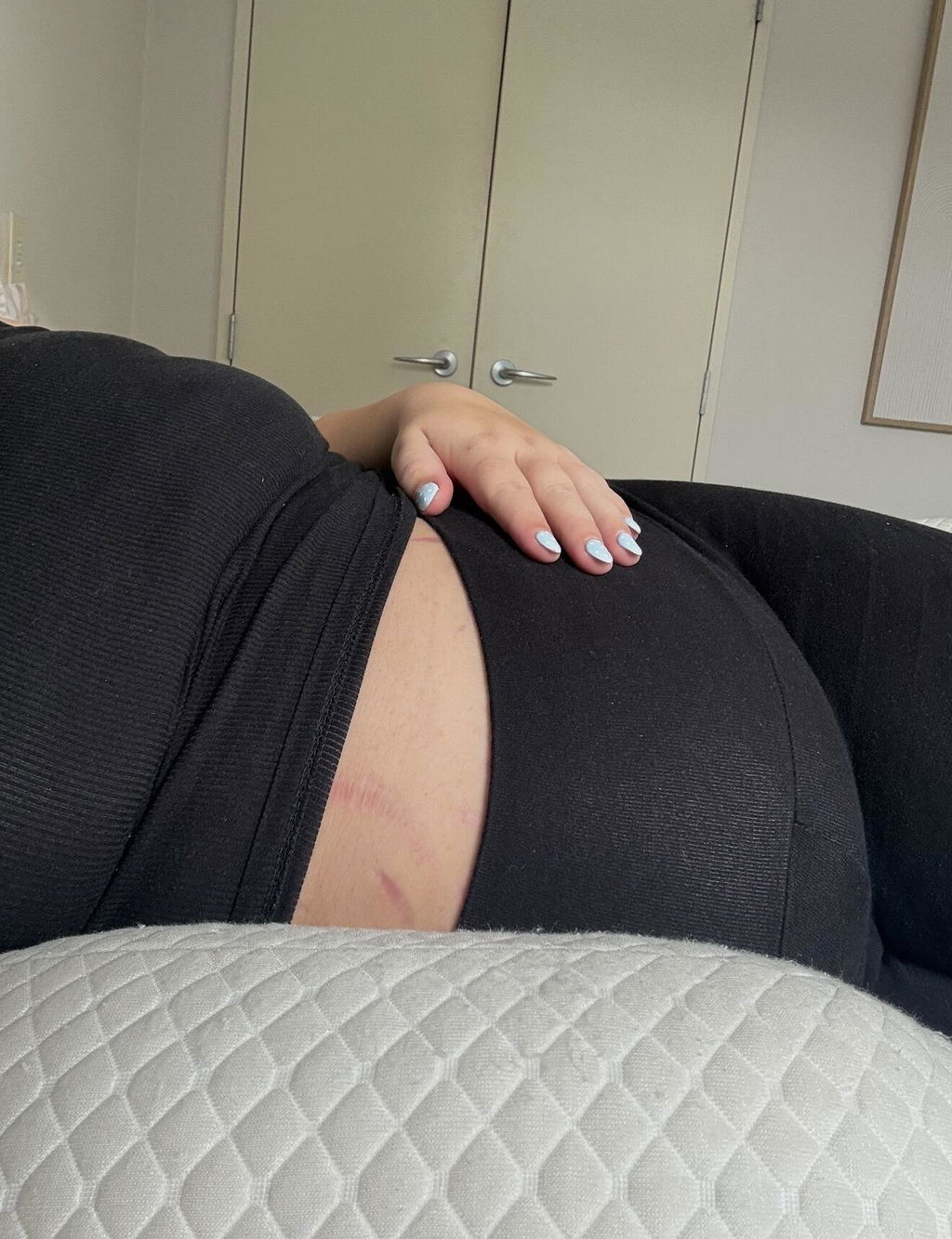
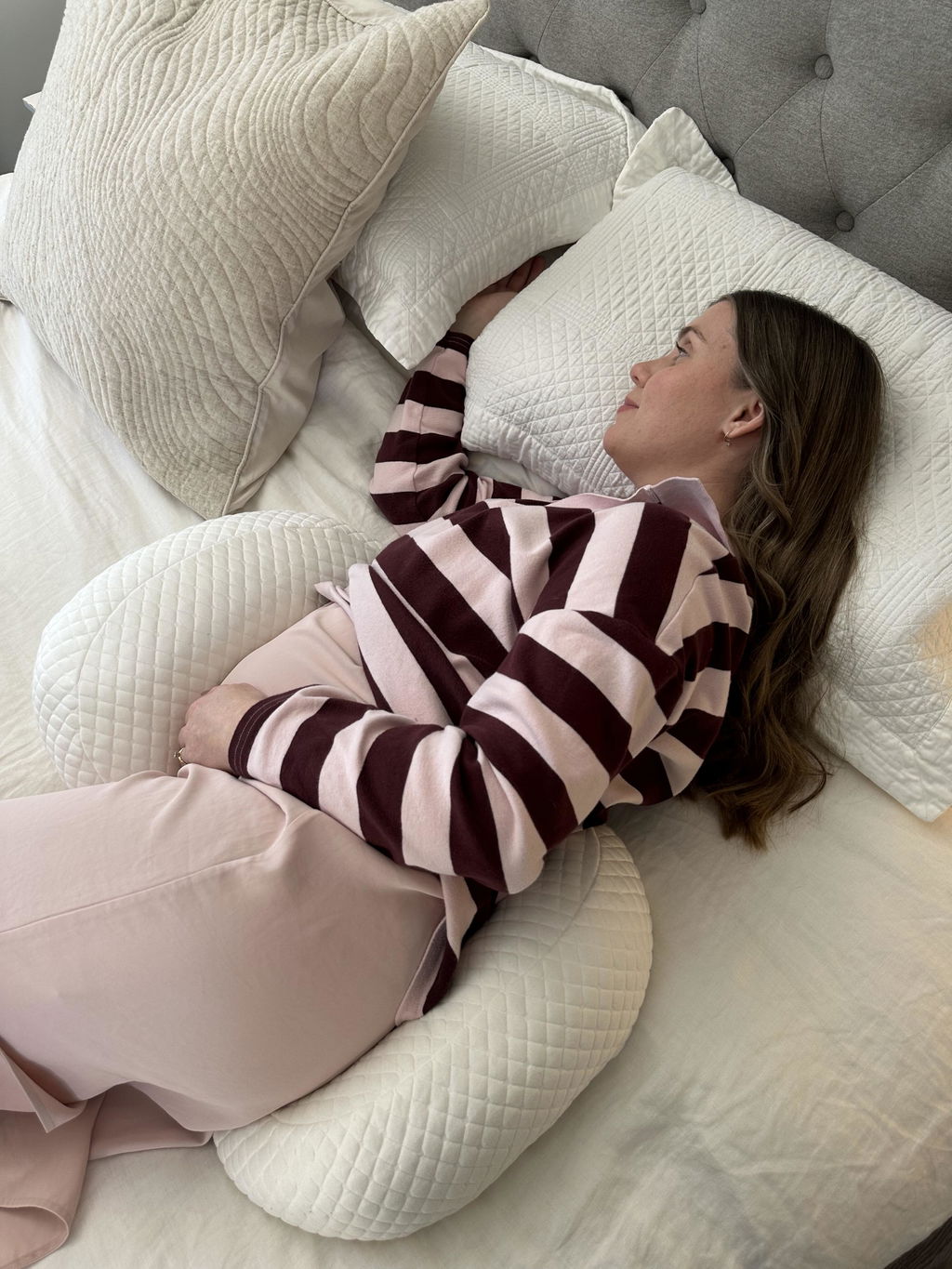
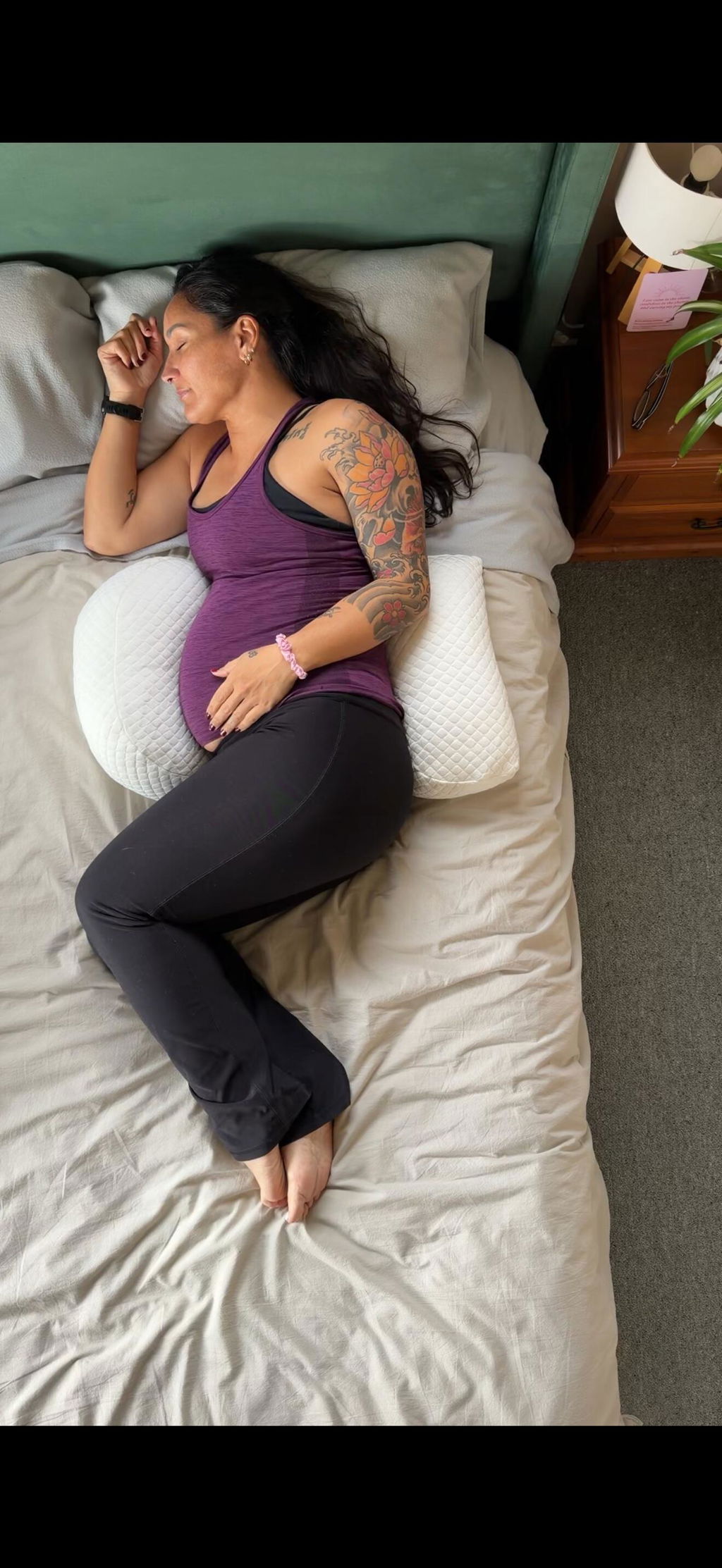
Placing a pillow underneath or alongside your bump can give it some extra support and make lying on your side feel more comfortable.
Put a pillow between your knees
This is one of the simplest things you can try.
A pillow between your knees and thighs gives your top leg somewhere to rest and can make side sleeping more comfortable, particularly if your hips or pelvis are aching.
Give your back some support
If you tend to roll backwards during the night, placing a pillow behind your back can make you feel more supported.
You don't need to completely prevent yourself from moving. The idea is simply to make your chosen position more comfortable.
Support your arms
This is one I didn't think about until later in pregnancy.
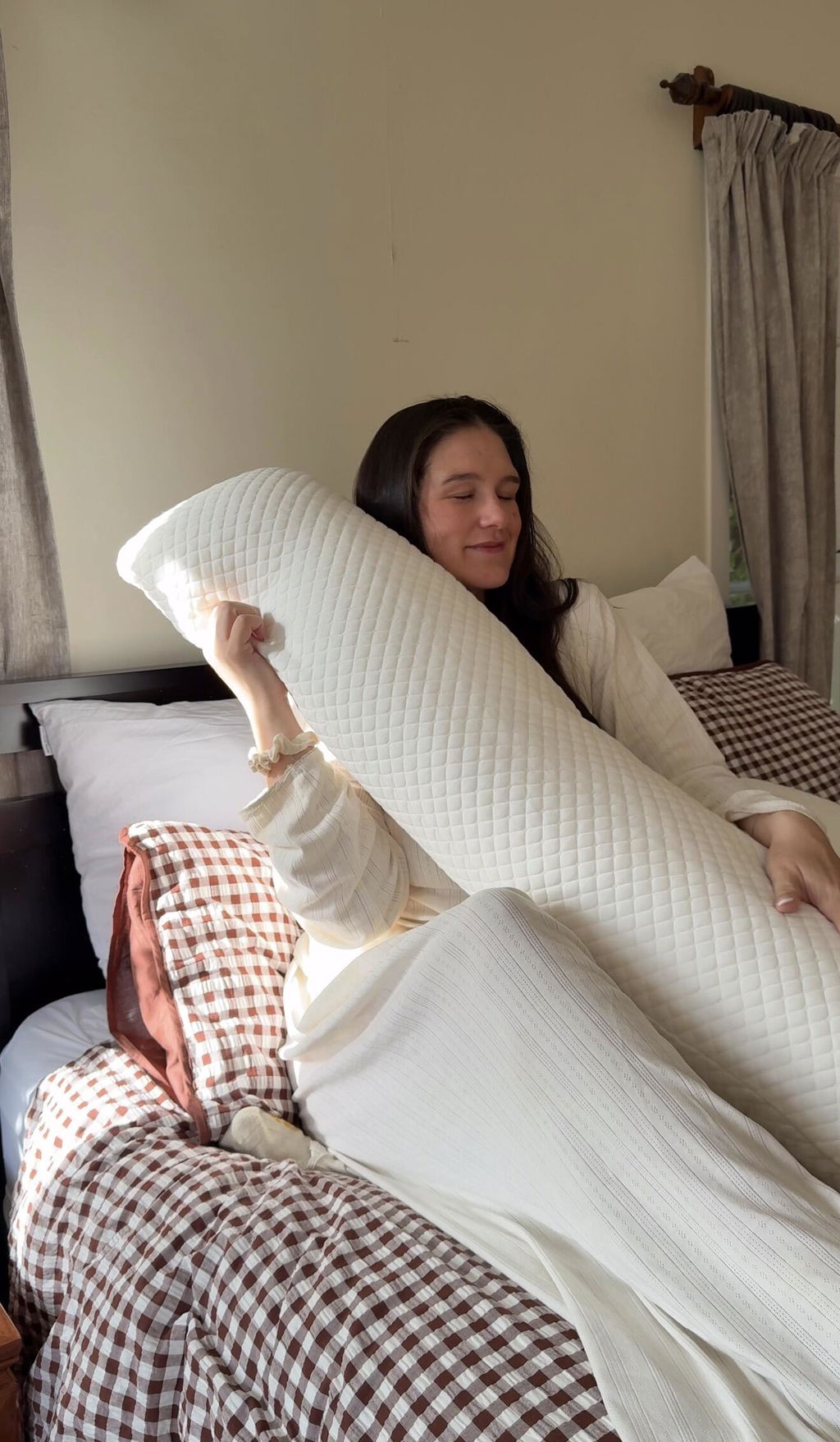
When you're lying on your side, your top arm needs somewhere to go. Having something to hug can take some pressure off your shoulders and stop you feeling like you're collapsing forwards.
This is one reason many women find a longer pregnancy pillow more comfortable than several small pillows.
What if you wake up on your back?
This is one of the biggest worries I hear from pregnant women.
If you wake up and realise you've rolled onto your back, don't panic.
Simply roll onto your side and get comfortable again.
You don't need to lie awake worrying that you've harmed your baby because you briefly woke up on your back.
The recommendation is about the position you go to sleep in later in pregnancy, rather than expecting you to control your body perfectly for the entire night.
Your body is going to move while you sleep. That's normal.
Read more: Can I Sleep on My Back During Pregnancy?

What if your hips hurt when you sleep?
Hip pain can be one of the most frustrating parts of pregnancy sleep.
You can be completely exhausted, but lying on one side for hours can leave one hip feeling sore and uncomfortable.
Try placing a pillow between your knees and making sure your top leg is fully supported.
If you're using a pregnancy pillow, you can also support your bump at the same time.
And don't feel like you have to stay on one side all night.
If you wake up uncomfortable, change sides and get settled again.
If your hip or pelvic pain is persistent or affecting your ability to walk or move comfortably, talk to your midwife, GP or a women's health physiotherapist.
What about heartburn and reflux?
Heartburn is another common reason pregnancy sleep gets interrupted.
A few things that may help include:
- Avoiding large meals close to bedtime
- Staying upright for a while after eating
- Raising the head of your upper body if that's comfortable
- Talking to your healthcare provider if reflux is persistent or particularly uncomfortable
Sleeping on your side may also be more comfortable for some women experiencing reflux.
If you're regularly waking because of heartburn, it's worth mentioning it to your midwife or GP. There are pregnancy-safe treatment options if lifestyle changes aren't enough.
How can I sleep better in each trimester?
Your sleep needs can change throughout pregnancy, so don't feel like you need to find one perfect setup and stick with it for nine months.
First trimester
You may not need much additional support yet.
If you're tired, prioritise rest where you can and make your bedroom as comfortable as possible.
There's no need to force yourself into side sleeping this early if another position is comfortable for you.
Second trimester
This is often when your bump starts becoming more noticeable and your normal sleeping position can start feeling different.
You may find a pillow between your knees or underneath your bump helpful.
It's also a good time to experiment with different sleeping positions before you're heavily pregnant.
Third trimester
This is usually when comfort becomes much more important.
Your bump is heavier, your hips may be more sensitive, and finding a comfortable position can become a nightly challenge.
Supporting your bump, hips, back and arms can make side sleeping much easier.
And if you're waking frequently, don't beat yourself up about it.
Sometimes pregnancy sleep simply comes in smaller chunks.
Do pregnancy pillows actually help?
They can.
A pregnancy pillow isn't a medical treatment, and you don't need one to have a healthy pregnancy.
But many women find that having additional support makes sleeping on their side much more comfortable.
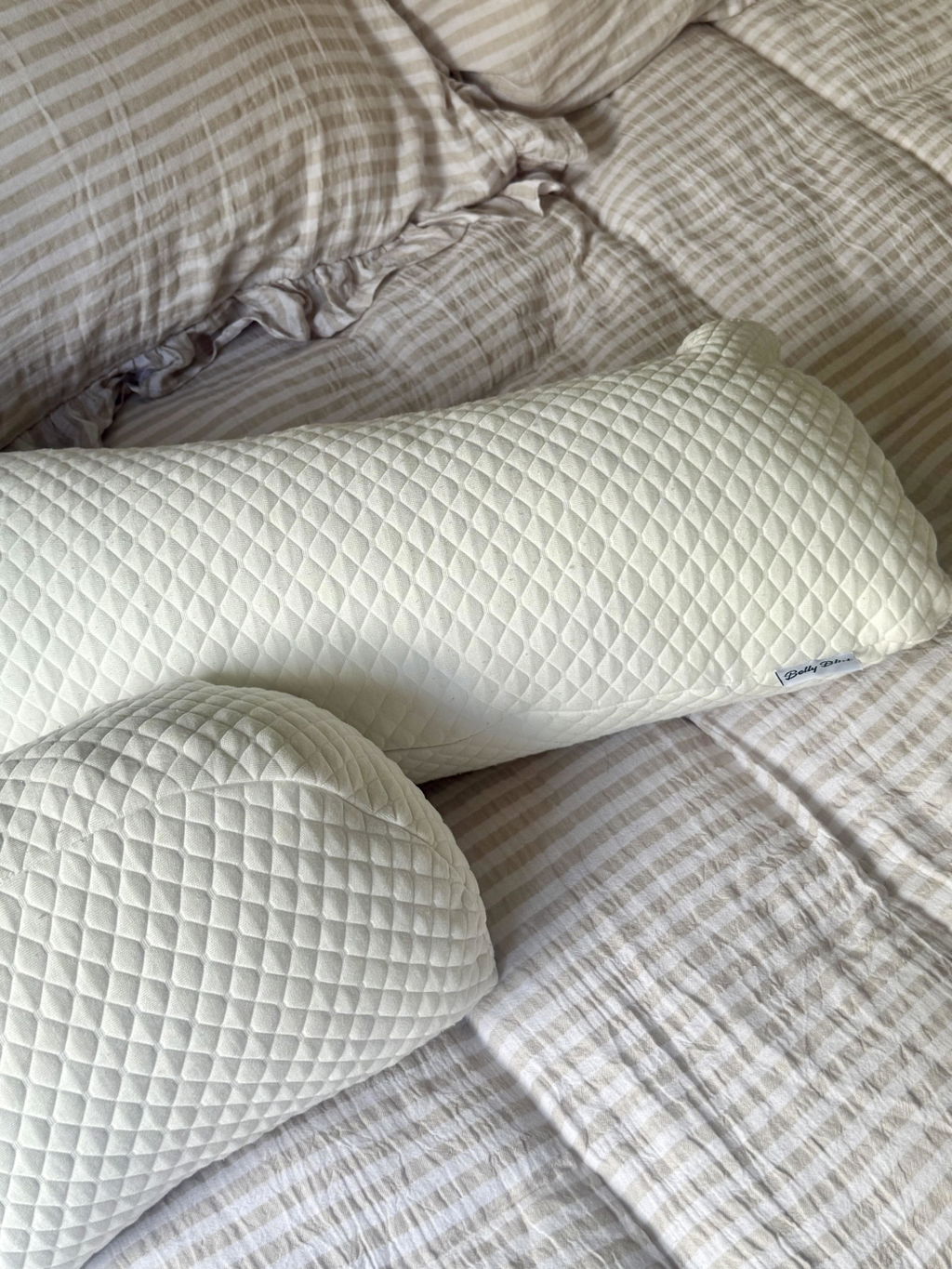
A pregnancy pillow can give you somewhere to support:
- Your growing bump
- Your knees and thighs
- Your back
- Your arms and shoulders
Instead of constantly moving several normal pillows around during the night, a pregnancy pillow can keep the support you need in one place.
I started using a pregnancy pillow during pregnancy and quickly became one of those women who wondered how I'd ever slept without one.
If you're waking up because your hips hurt, constantly adjusting your pillows or struggling to get comfortable on your side, it may be worth trying one.
Explore the Belly Bliss Pregnancy Pillow →

A few other things that can help you sleep during pregnancy
Sometimes improving pregnancy sleep isn't about your pillow at all.
A few small changes can help too.
Keep your bedroom cool.
Pregnancy can make you feel warmer than usual, so a cooler bedroom can make getting comfortable easier.
Keep a water bottle nearby.
You may already be waking up to use the bathroom, but being thirsty on top of that doesn't help.
Limit your phone before bed.
If you're already struggling to switch off, scrolling in bed probably isn't going to make it easier.
Get some gentle movement during the day.
A short walk or gentle pregnancy safe movement can help you feel less stiff by bedtime. You don't need to push yourself or commit to a huge exercise routine.
Don't stress about a bad night.
One terrible night's sleep doesn't mean you've done anything wrong. Pregnancy is a huge physical change, and some nights will simply be harder than others.
FAQs about sleeping during pregnancy
When should I start sleeping on my side?
You don't need to force yourself to sleep on your side early in pregnancy. As pregnancy progresses, particularly from around 28 weeks, guidance generally recommends going to sleep on your side.
Is it safe to sleep on my right side while pregnant?
Yes. You don't need to sleep exclusively on your left side. Sleeping on either side is generally fine.
What happens if I wake up on my back?
Don't panic. Simply roll onto your side and go back to sleep. It's normal to change position while sleeping.
How can I make side sleeping more comfortable?
Try supporting your bump, placing a pillow between your knees and giving your back or arms some additional support. A pregnancy pillow can combine several of these types of support.
Can a pregnancy pillow help with hip pain?
It may help make sleeping more comfortable by supporting your legs, hips and bump. However, persistent or significant pain should be discussed with your midwife, GP or a women's health physiotherapist.
Can I use a pregnancy pillow after my baby is born?
Absolutely. Many pregnancy pillows can continue to be useful after birth for your own comfort, including during breastfeeding or bottle feeding.
Final thoughts
There's no magical sleeping position that guarantees a perfect night's sleep during pregnancy.
Sometimes you'll sleep brilliantly. Other nights you'll wake up at 3am, roll over for the tenth time and wonder how you're going to make it through another few months.
That's pregnancy.
But making your sleeping position more supportive can help.
Start with the basics: sleep on your side as recommended later in pregnancy, support your bump, put something between your knees and give your back and arms somewhere comfortable to rest.
And don't panic if you move during the night.
The goal isn't perfect pregnancy sleep. It's simply finding ways to make the sleep you can get as comfortable as possible.
Your body is doing a lot right now. It deserves a little extra support.