

Quick Summary — Here’s What You’ll Learn
If you’re wondering whether a belly band is actually worth it, here’s what we’ll cover:
• The difference between traditional maternity belts and modern belly bands
• Why some pregnancy belts can feel bulky and restrictive
• How a belly band provides gentle support without the brace-like feeling
• Why comfort and flexibility matter when your body is changing every week
• When pregnant women usually start wearing a belly band for support
Pregnancy is incredible, but growing a tiny human can also come with back pain, pelvic pressure, and that “my bump suddenly feels very heavy” moment.
That’s why many mums-to-be look for extra support, usually in the form of a pregnancy belt or belly band.
But here’s the thing: not all pregnancy support products are created equal.
Traditional maternity belts were originally designed with strong structure and rigidity in mind. While they can help in certain situations, many women now prefer a modern belly band designed for comfort, flexibility, and everyday life.
Let’s break down the difference and why more pregnant women are choosing belly bands.
What Is a Traditional Maternity Belt?
A traditional maternity belt is a structured support belt worn under the belly to help lift the weight of the bump and reduce strain on the back and pelvis.
These belts are typically designed with:
-
Thick velcro straps
-
Rigid support panels
-
Multiple adjustment points
-
Heavy-duty materials
They were originally created to provide strong structural support, particularly for women experiencing significant pelvic pain or back discomfort.
While they can be effective, many pregnant women find traditional belts can feel:
-
Bulky
-
Restrictive
-
Uncomfortable for all-day wear
-
Difficult to adjust throughout the day
Which is why many women now prefer something simpler and more comfortable.

What Is a Pregnancy Belly Band?
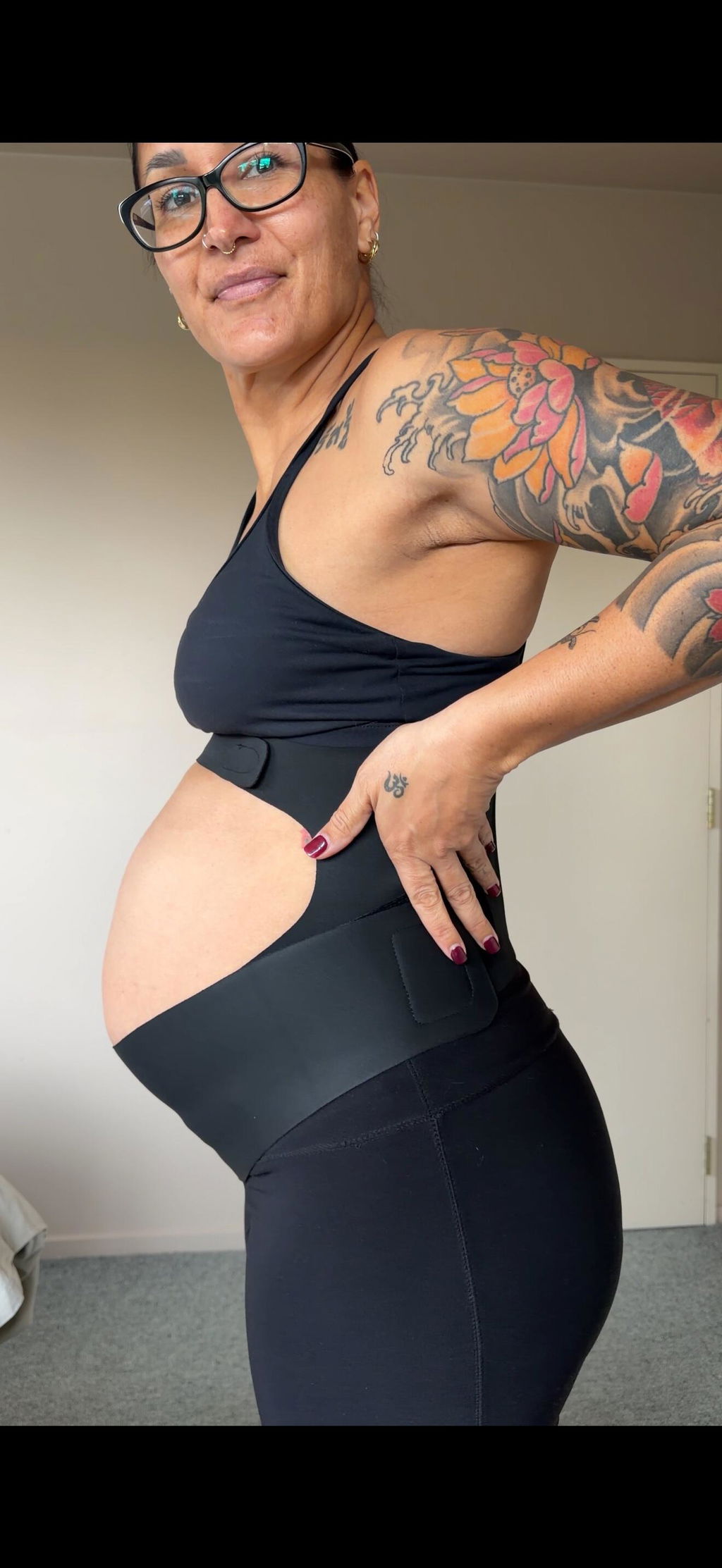
A pregnancy belly band is designed to provide support using soft, flexible materials that move with your body.
Instead of rigid straps or thick panels, a belly band works by:
-
Supporting the belly from underneath
-
Reducing pressure on the lower back
-
Helping distribute the weight of your bump more evenly
-
Allowing you to move freely throughout the day
Because they’re designed with comfort and everyday wear in mind, belly bands are often the go-to choice for mums who want support without feeling like they’re wearing a brace.

Why Our Belly Band Is Better Than Traditional Maternity Belts
1. Designed for Real Life
Many traditional maternity belts feel quite structured, which means they’re often worn only when pain becomes severe.
A belly band is different.
It’s designed for everyday support, meaning you can comfortably wear it while:
-
Walking
-
Working
-
Running errands
-
Picking up toddlers
-
Relaxing at home
Instead of feeling stiff or restrictive, it moves with your body as your day unfolds.
2. Gentle Support Without the Bulk
Some maternity belts can feel more like a medical brace than a support garment.
While strong compression can help in certain cases, it’s not always ideal for daily wear.
A belly band provides gentle lift and support, helping reduce pressure on your back and pelvis without the heavy or bulky feeling.
Many mums say it feels like a supportive hug for the bump.
3. Simple to Wear
Traditional maternity belts often involve:
-
Big Velcro panels
-
Adjustments throughout the day
A belly band keeps things simple.
It’s quick to put on, easy to adjust, and designed to stay comfortably in place so you can focus on your day rather than constantly fiddling with your support belt.
4. Comfortable Under Everyday Clothing
Traditional maternity belts can sometimes feel bulky under clothing, especially with thicker materials or larger straps.
Belly bands are designed to be sleek and low profile, making them easy to wear and discreet under your clothes.
Which makes them far more practical for everyday life.
When Should You Start Wearing a Belly Band?
Many women begin wearing a pregnancy belly band between 18 and 24 weeks, when the bump becomes heavier and additional support starts to feel helpful.
However, every pregnancy is different.
Some mums benefit from support earlier, especially if they experience:
-
Lower back pain
-
Pelvic pressure
-
Round ligament discomfort
-
Increased belly weight
Adding gentle support at the right time can help make daily movement feel much more comfortable.

Do Pregnancy Belly Bands Actually Help?
Many physiotherapists and maternity care professionals recommend support garments as a comfort tool during pregnancy.
By helping redistribute the weight of the bump, a belly band can reduce strain on the lower back, hips, and pelvis.
Many pregnant women report improvements in:
-
Back discomfort
-
Pelvic pressure
-
Walking posture
-
Overall daily comfort
While support garments aren’t a medical treatment, they can be a helpful way to support your body as it adapts to pregnancy.
The Bottom Line
Both traditional maternity belts and pregnancy belly bands aim to support your body during pregnancy but they do it in different ways.
Traditional belts focus on maximum structure, while belly bands prioritise comfort, flexibility, and everyday wearability.
For many mums-to-be, a thoughtfully designed belly band like the Belly Bliss pregnancy belt offers the perfect balance: gentle support, lightweight comfort, and the freedom to move through pregnancy with ease.
And when your body is doing something as incredible as growing a baby, that kind of support can make all the difference.