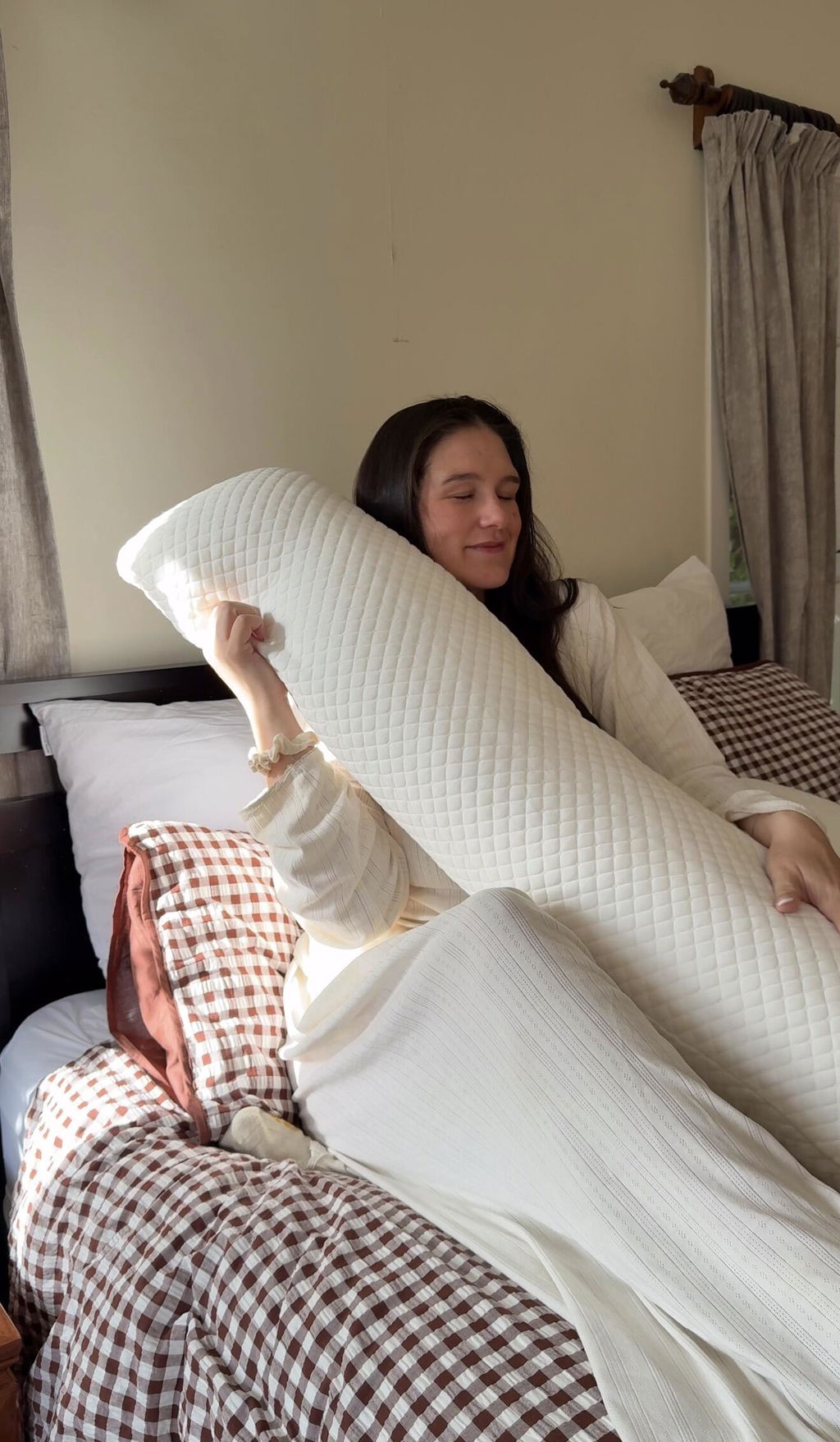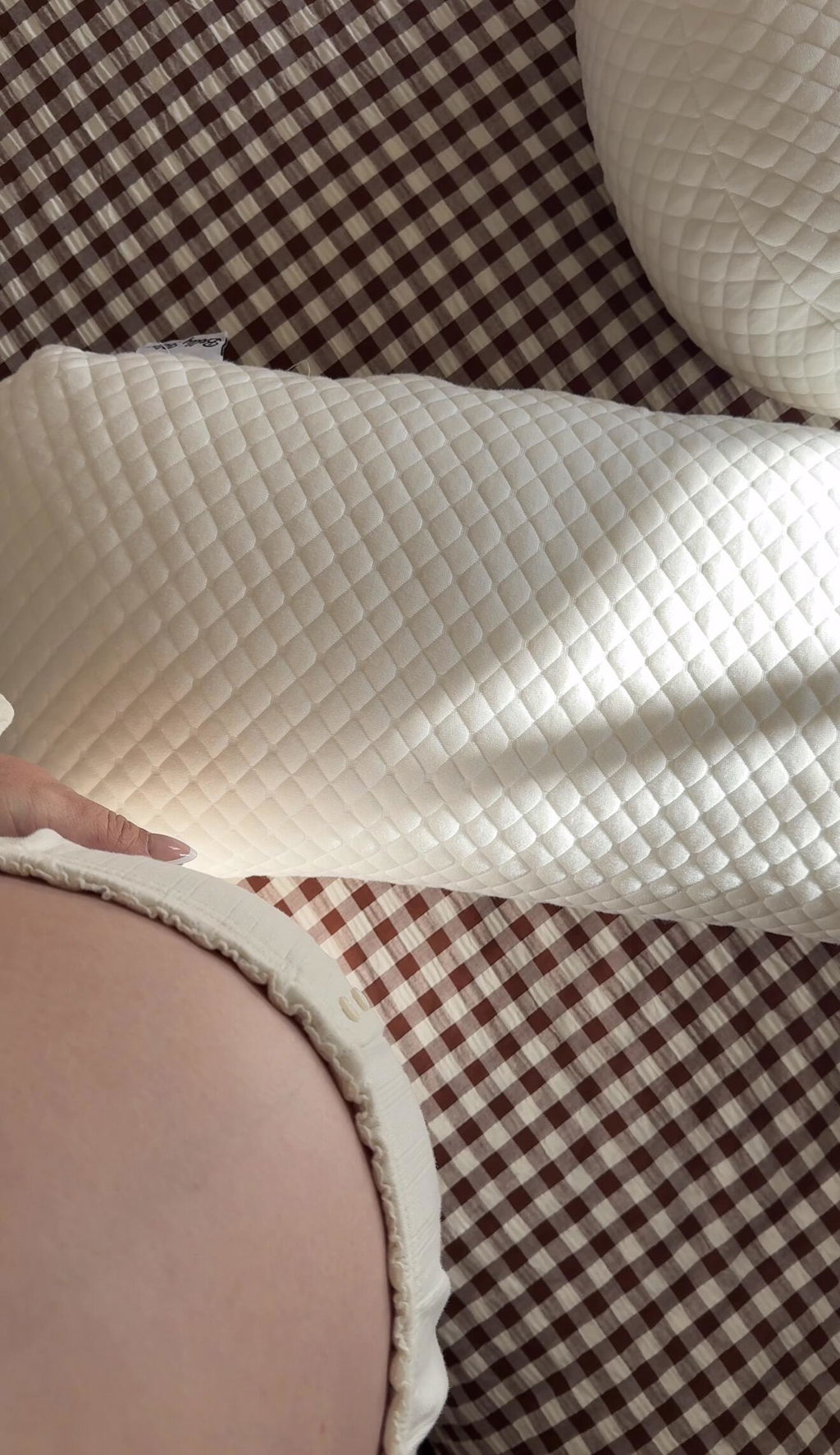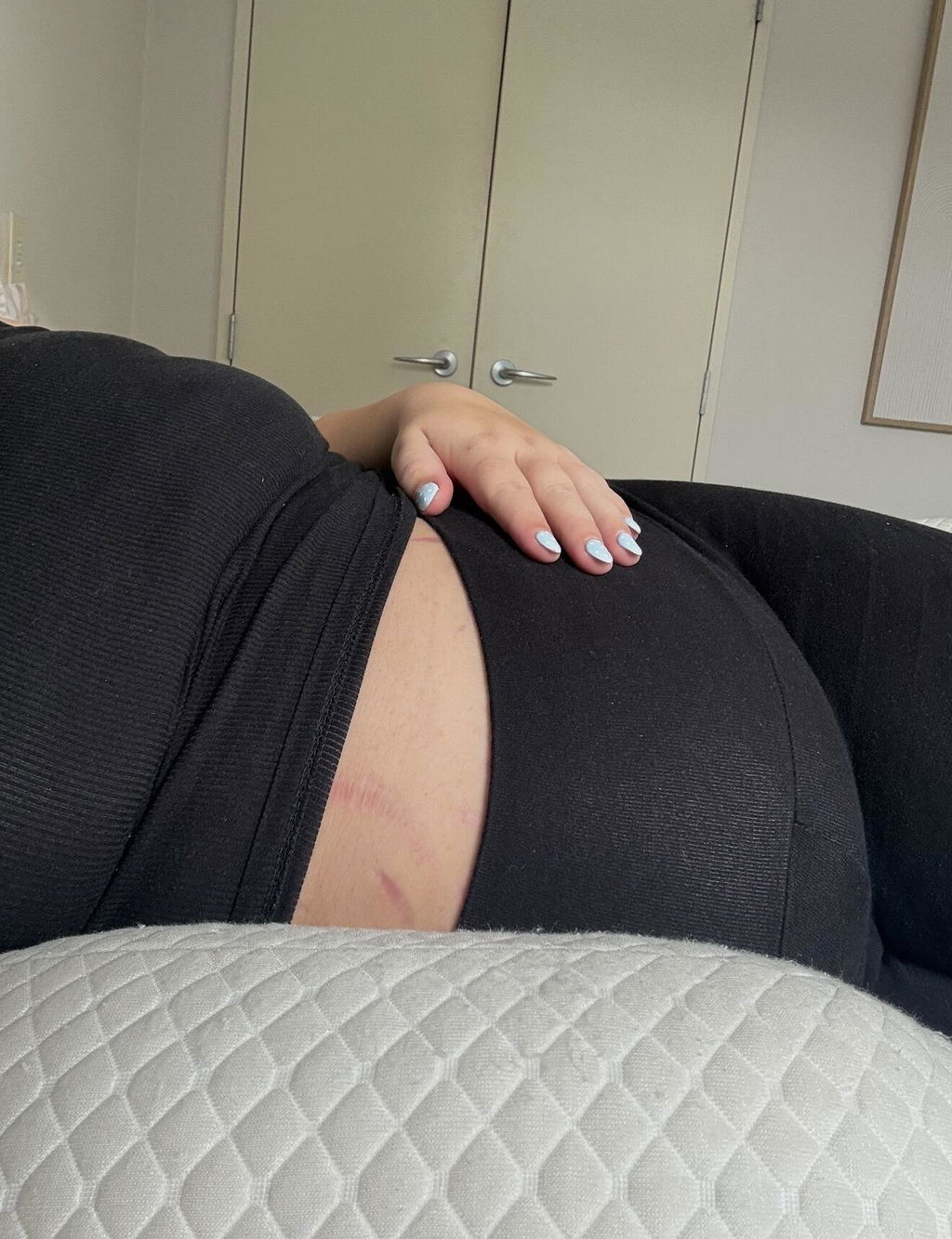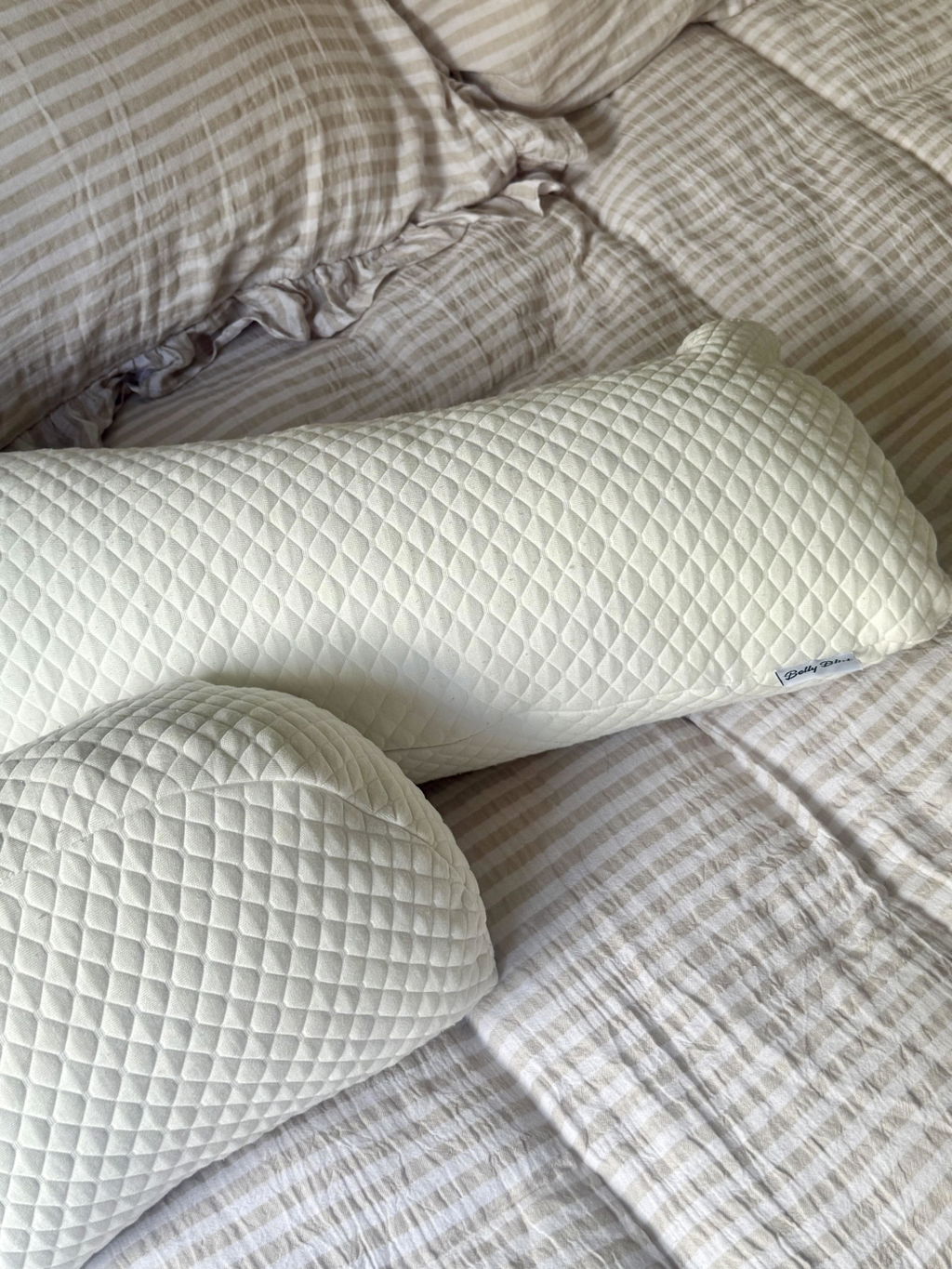


Pregnancy can bring a whole new collection of aches and pains that you probably weren't expecting.
As your bump grows, your posture changes, your weight distribution shifts and sleeping comfortably can become surprisingly difficult. For me, some of the hardest moments weren't during the day at all. They were at night, when I was trying to find a position that didn't leave my hips, back or pelvis aching.
A pregnancy pillow can't fix every type of pregnancy pain, but it can provide extra support where your body needs it and make certain sleeping positions more comfortable.
The key is knowing how to position it.
If you're struggling with discomfort at night, here are some ways you can use a pregnancy pillow to support your body.

1. Back Pain
Back pain is very common during pregnancy, particularly as your bump grows and your posture naturally changes.
Your centre of gravity shifts forwards, your abdominal muscles are stretched and your lower back can end up doing more work to support your changing body.
How a pregnancy pillow can help
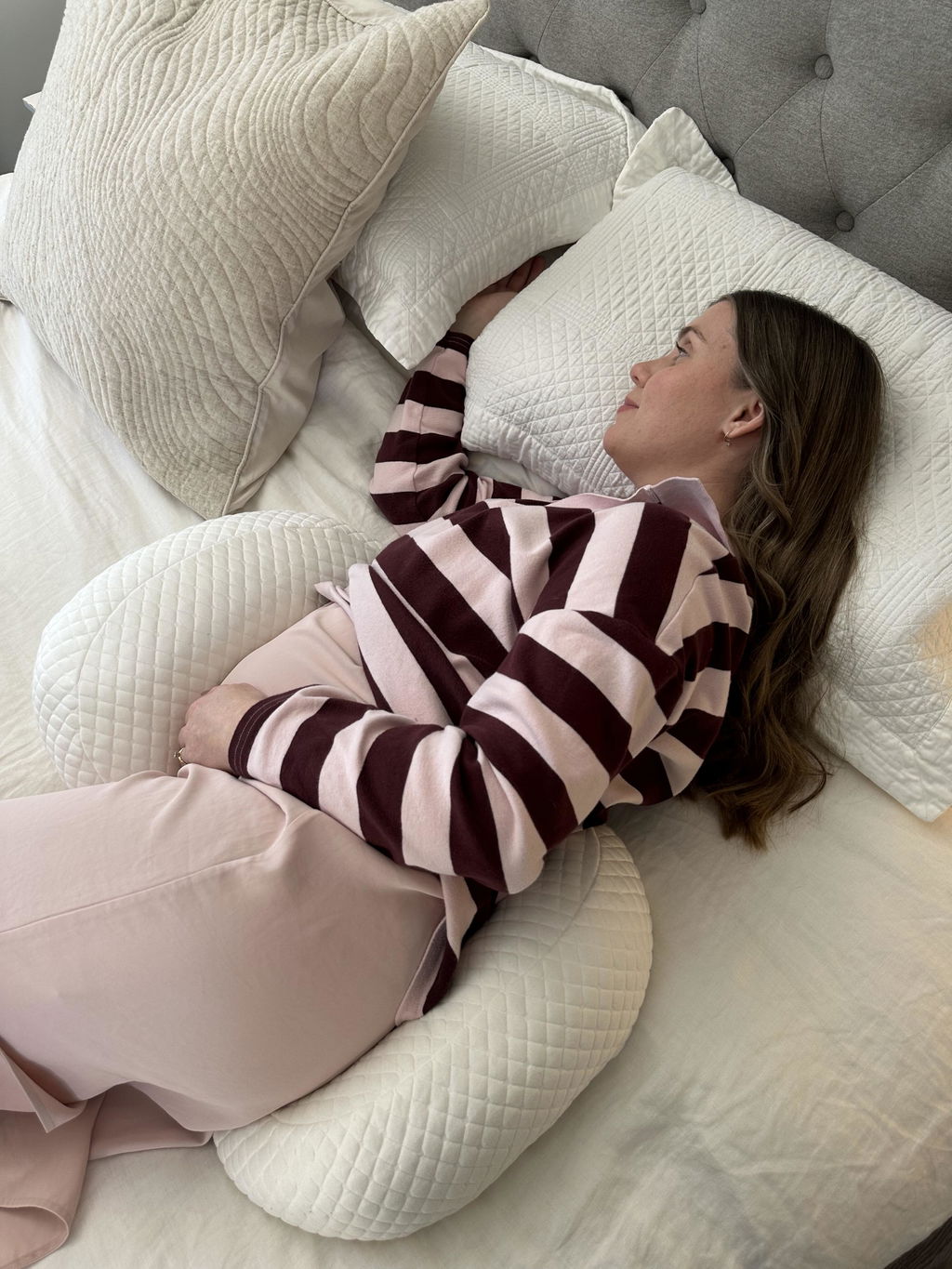
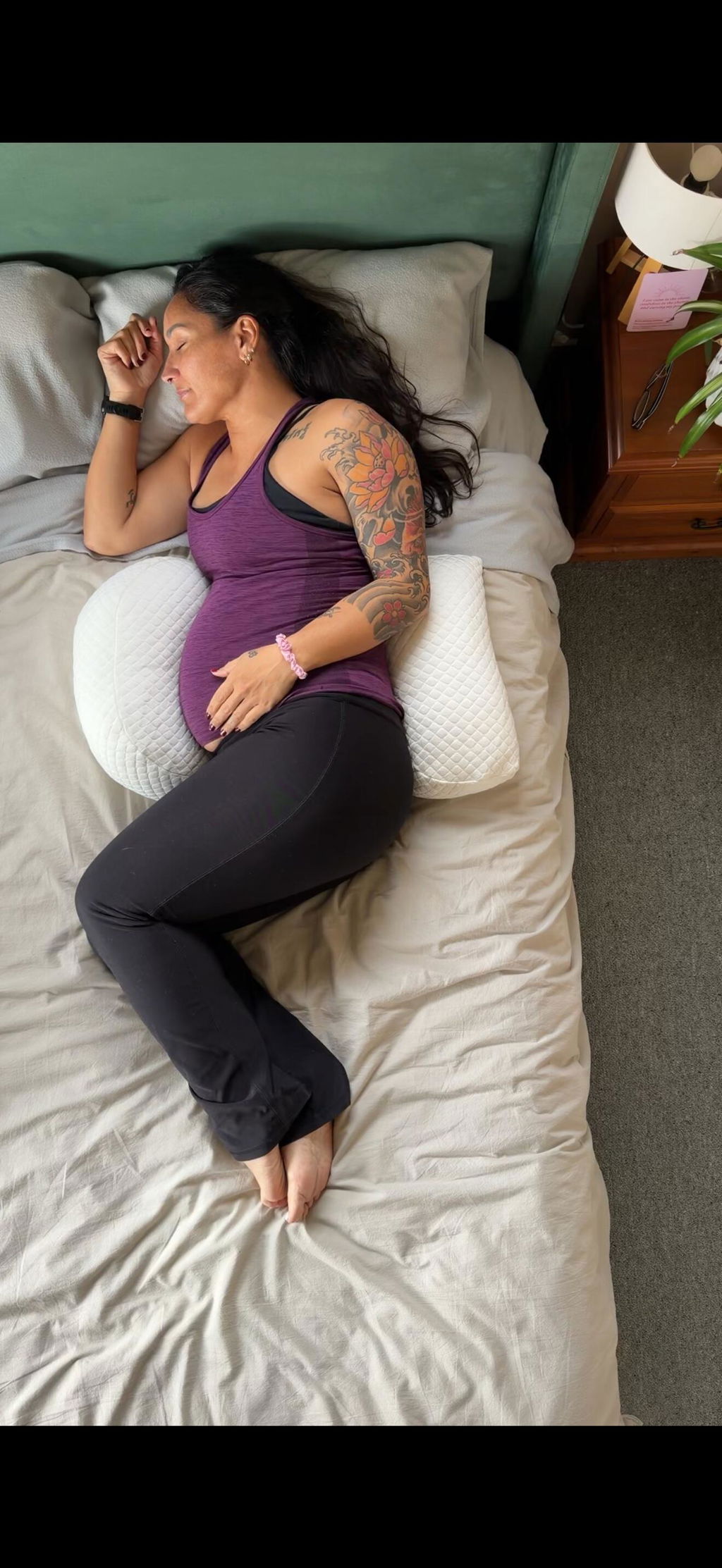
The right setup can give your bump, back and legs some extra support and make side sleeping more comfortable.
Try this:
- Lie on your side in a comfortable position.
- Place a pillow or wedge behind your back if you like having some support behind you.
- Hug the long part of your pregnancy pillow in front of your body.
- Place part of the pillow between your knees.
- Make sure your top leg is supported rather than dropping forwards.
The aim isn't to force your spine into a particular position. You're simply trying to find a position where your body feels supported and relaxed.
Tip: If you tend to roll backwards while sleeping, having some gentle support behind your back can make side sleeping feel more secure.
2. Hip Pain
Hip pain can become particularly noticeable at night when you're spending hours on one side.
As your pregnancy progresses, your joints and ligaments are also affected by hormonal changes, while your growing bump changes how your body carries its weight.
How a pregnancy pillow can help
Supporting your top leg can help take some of the strain out of side sleeping and stop your top leg from pulling your pelvis forwards.
Try this:
- Lie on your side.
- Place the pregnancy pillow between your knees and thighs.
- Make sure your top leg is fully supported.
- Keep your knees comfortably bent.
- Try to keep your hips stacked rather than letting your top knee fall forwards.
You may also find that alternating sides throughout the night helps if one hip becomes uncomfortable.
And don't worry about having to stay on one particular side all night. If you wake up and want to change position, simply get comfortable again.
Tip: If you're consistently waking with significant hip pain, talk to your midwife, GP or a women's health physiotherapist for personalised advice.
3. Sciatic Pain
Sciatica can cause pain that travels from the lower back or buttocks down into the leg. Pregnancy can sometimes contribute to sciatic type symptoms as your body changes.
How a pregnancy pillow can help
A pregnancy pillow isn't a treatment for sciatica, but good positioning may help you find a more comfortable sleeping position.
Try this:
- Lie on your side.
- Place the pillow between your knees and legs.
- Support your upper leg so it doesn't drop forwards.
- Keep your spine in a comfortable, neutral position rather than curling tightly into a ball.
- Use additional support behind your back if that feels comfortable.
The most important thing is to listen to your body. If a particular position makes the pain worse, don't force yourself to stay there.
Tip: If you're experiencing persistent, severe or worsening pain, numbness or weakness, speak with your healthcare provider rather than relying on pillow positioning alone.
4. Pelvic Discomfort
Pelvic discomfort can make getting comfortable in bed particularly frustrating.
For some women, even rolling over can be painful, especially later in pregnancy.
How a pregnancy pillow can help
Extra support between your legs and under your bump can make movement feel more controlled and reduce the amount of unsupported weight your body is managing.
Try this:
- Lie on your side.
- Place the pillow between your knees and thighs.
- Support your growing bump with the front section of the pillow.
- Keep your legs supported when you turn.
- Move slowly when changing positions rather than twisting quickly.
One thing that helped me was becoming much more deliberate about how I rolled over.
Instead of trying to twist my upper body and then dragging my legs around, I'd move my shoulders, hips and legs together.
It sounds like a small thing, but when you're already uncomfortable, those little changes can make a difference.
Important: If you're experiencing pelvic girdle pain, ask your midwife or a women's health physiotherapist about the best ways to move and position your body. A pregnancy pillow can provide comfort and support, but it isn't a treatment for PGP.
5. Supporting Your Bump
Sometimes the simplest use for a pregnancy pillow is simply giving your bump somewhere to rest.
How a pregnancy pillow can help
As your belly gets bigger, it can feel like it's pulling you forwards when you're lying on your side.
Try this:
- Lie comfortably on your side.
- Bring the pillow in front of your body.
- Position the pillow underneath or alongside your bump for gentle support.
- Make sure nothing is pressing uncomfortably into your stomach.
You should feel supported rather than squashed.
If you find yourself constantly adjusting a normal pillow underneath your bump because it keeps slipping away during the night, a pregnancy pillow can be a much easier option.
Why an Adjustable Pregnancy Pillow Can Be Useful
Your body doesn't stay the same throughout pregnancy, so it makes sense that your support needs can change too.
What feels comfortable at 16 weeks might not feel comfortable at 32 weeks.
An adjustable or modular pregnancy pillow gives you more flexibility to change how you use it as your bump grows.
You might want:
- More support under your bump
- A thicker pillow between your knees
- Extra support behind your back
- Less support once you find a position that works for you
That's one of the reasons I designed the Belly Bliss Pregnancy Pillow as a three piece modular pillow. You can adjust the pieces depending on what your body needs at different stages of pregnancy.

A Few Things to Remember
A pregnancy pillow can be a really useful comfort tool, but it isn't a cure for pregnancy pain.
If you're experiencing ongoing or severe pain, it's worth talking to your midwife, GP or a women's health physiotherapist. They can help work out what's causing your discomfort and give you advice specific to your pregnancy.
And don't feel like you have to find the "perfect" sleeping position.
Pregnancy is uncomfortable enough without lying awake worrying about whether your knees are at exactly the right angle.
Find a position that feels comfortable, support the areas that need it and change positions when you need to.
Final Thoughts
Pregnancy comes with enough changes without adding a nightly battle to get comfortable.
A pregnancy pillow won't magically make every ache disappear, but the right setup can give your hips, back, pelvis and bump some extra support while you sleep.
For me, that extra support became much more important as my pregnancies progressed. What started as simply trying to get comfortable at night became something I relied on throughout pregnancy and beyond.
If you're waking up sore, constantly rearranging pillows or struggling to get comfortable on your side, it might be worth experimenting with a pregnancy pillow and seeing whether it makes a difference for you.