

Quick Summary – Here's What You'll Learn:
- Why rolling over in bed causes pelvic pain during pregnancy
- The physio recommended technique for turning over without aggravating pain
- Why bringing your heels close to your bottom before rolling is a game-changer
- How a pregnancy pillow reduces the strain of every nighttime position change
- When to seek professional support and what to expect
- FAQs about pelvic pain, sleep, and rolling over during pregnancy
If rolling over in bed has become one of the worst parts of your night, you're definitely not alone.
For some women, getting comfortable isn't the problem. It's what happens when you need to change positions.
You finally settle in, start drifting off, then realise you're lying on one hip for too long. You know you need to turn over, but the thought of moving is enough to make you sigh.
If you've experienced that sharp or aching feeling through your pelvis, hips or lower back when you roll over, you may be experiencing pelvic girdle pain (PGP).
The good news is that there are some simple changes you can make to how you move in bed that may make turning over more comfortable.
One of the biggest things I learnt was to bend my knees, bring my heels towards my bottom and keep my knees together before rolling.
It sounds almost too simple, but changing the way you move can make getting from one side to the other feel much easier.

What is pelvic girdle pain?
Pelvic girdle pain, often shortened to PGP, is pain around the joints of the pelvis during pregnancy.
You might feel it:
- At the front of your pelvis or around your pubic bone
- Around your hips
- In your lower back or buttocks
- Into your groin or thighs
It can be particularly noticeable when you're doing movements that involve your legs moving separately, such as getting out of a car, walking up stairs, getting dressed or turning over in bed.
PGP is common during pregnancy, but that doesn't mean you simply have to put up with it.
If you're experiencing pelvic pain, your midwife, GP or a women's health physiotherapist can help you understand what's going on and give you advice that's specific to you.
Why can rolling over hurt so much?
Rolling over might seem like one simple movement, but your hips, pelvis and core are all involved.
When you're experiencing PGP, movements that involve twisting or moving your legs separately can sometimes aggravate your symptoms.
That's why one of the most commonly recommended approaches is to try to keep your legs together and move your body more as one unit.
Instead of twisting your upper body first and then dragging your legs around afterwards, think about moving your shoulders, hips and legs together.
It takes a little practice, especially when you're half asleep, but it can make a difference.
How to roll over in bed with pelvic pain
Here's the technique that helped me most.
1. Bring your heels towards your bottom
Before you start rolling, bend your knees and bring your heels closer towards your bottom.
You don't need to pull them right in. Just get your knees comfortably bent with your feet resting on the mattress.
This gives you more control over the movement and makes it easier to keep your legs together.
2. Keep your knees together
This is the part that's easy to forget.
Try to keep your knees together as you roll rather than allowing your top leg to fall forwards or your knees to separate.
You can even place a pillow between your knees if that feels more comfortable.
Think of your legs moving together rather than independently.
3. Move your whole body together
Rather than twisting your shoulders first and then moving your hips, try to roll your shoulders, hips and legs together.
Imagine you're a log rolling across the mattress.
It might feel a little awkward at first, but once you get used to it, it can become automatic.
4. Take your time
There's no need to rush.
If you're already experiencing pain, suddenly twisting or throwing your legs over can make the movement more uncomfortable.
Slow and controlled is your friend.
5. Get comfortable on the other side
Once you've rolled over, settle your legs into a comfortable position and make sure your bump and hips have the support they need.
A pillow between your knees can help support your top leg, while another pillow or pregnancy pillow can provide support around your bump and back.
Why bringing your heels up can help
This was one of those little things I wish I'd learnt earlier.
When your legs are stretched out straight, it can be harder to control the movement when you roll.
Bending your knees gives you a more stable starting position and makes it easier to move your legs together rather than letting one leg swing independently.
Combined with keeping your knees together and moving your body as one unit, it can make rolling over feel much more controlled.
It won't work for everyone, and it isn't a treatment for PGP, but it's a simple technique that's worth trying if turning over is painful.
Use a pillow to support your legs
Once you've rolled onto your side, a pillow between your knees can make a big difference to how comfortable you feel.
Ideally, you want your top leg to be supported rather than hanging forwards.
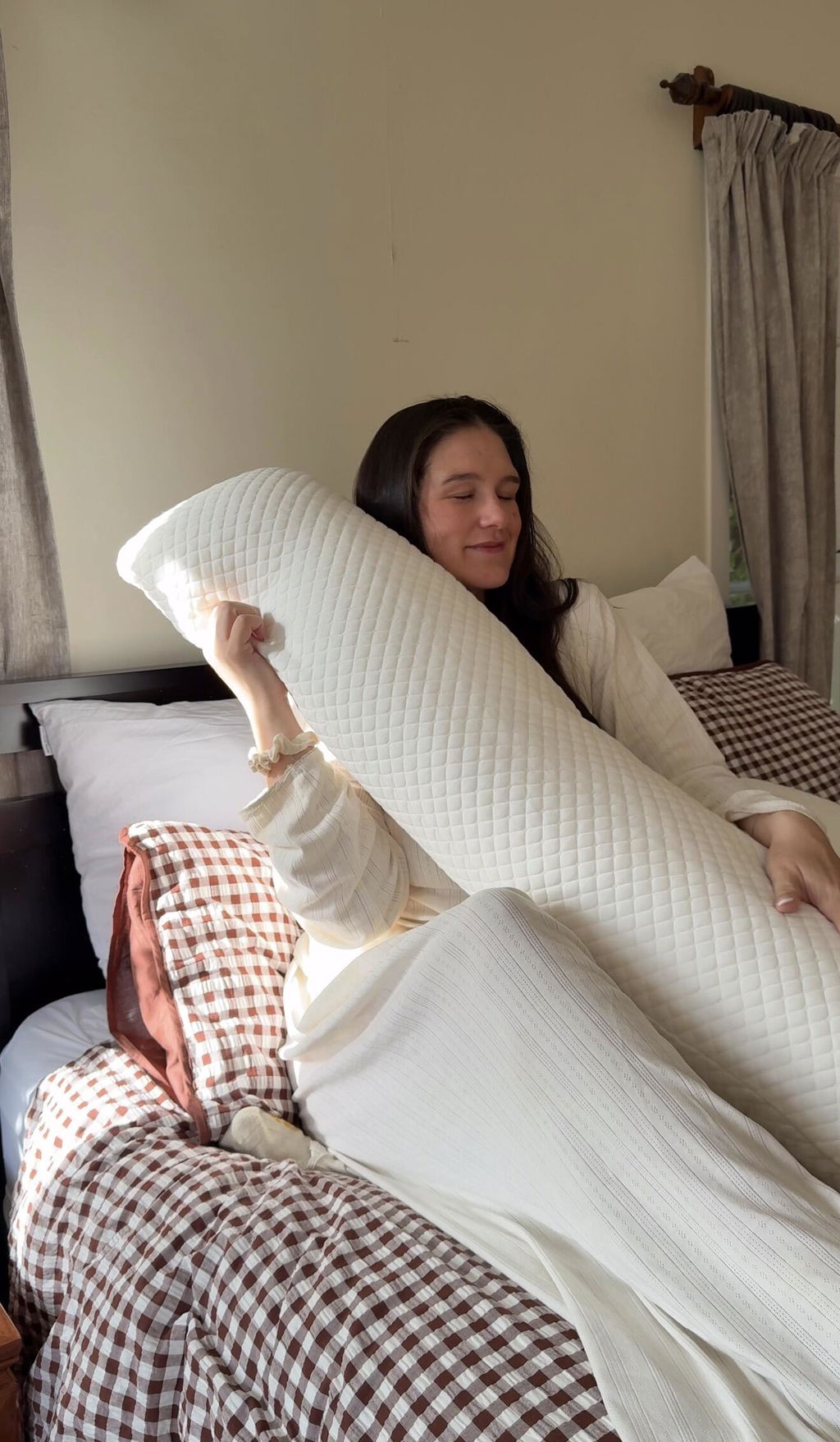
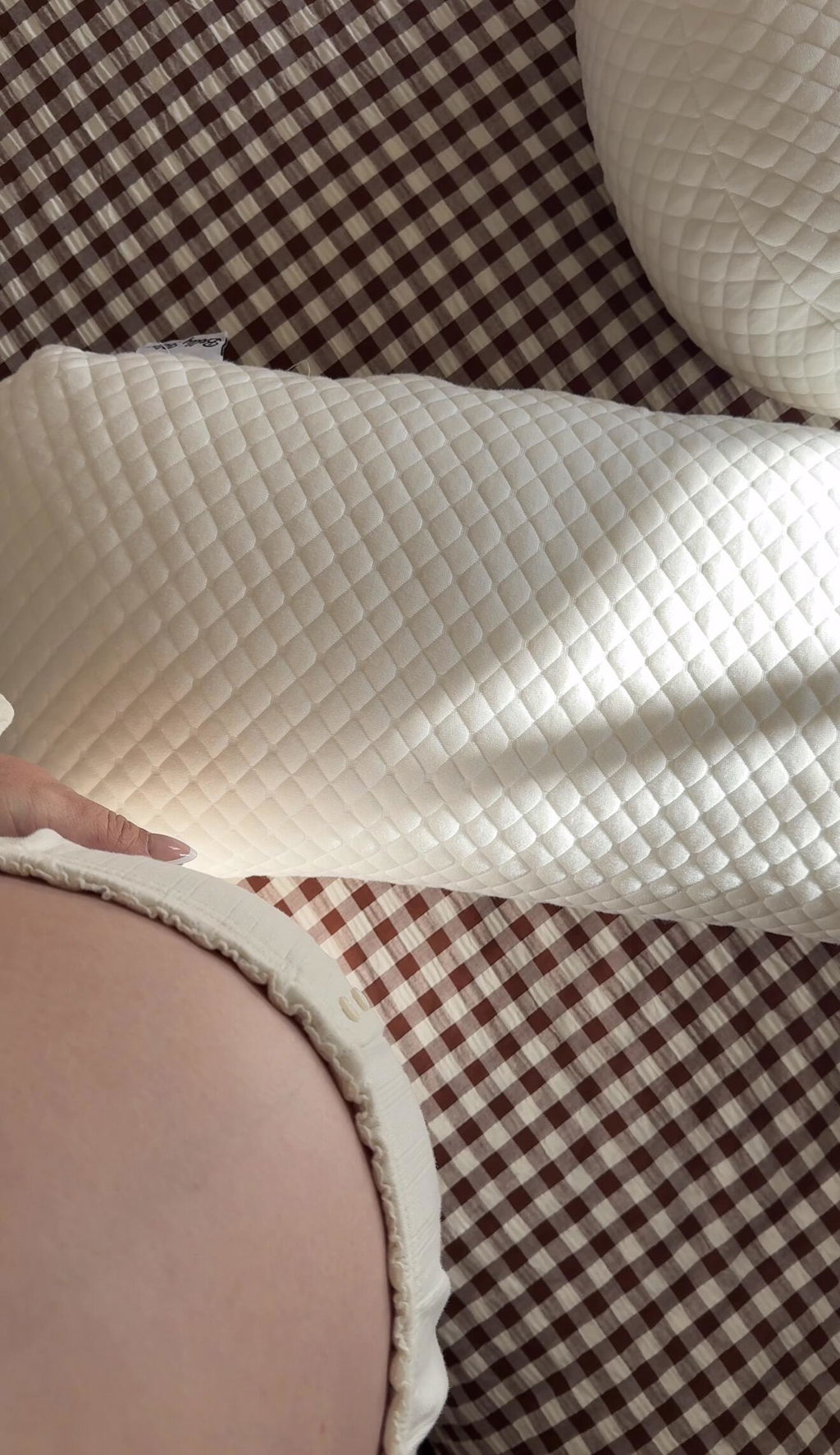
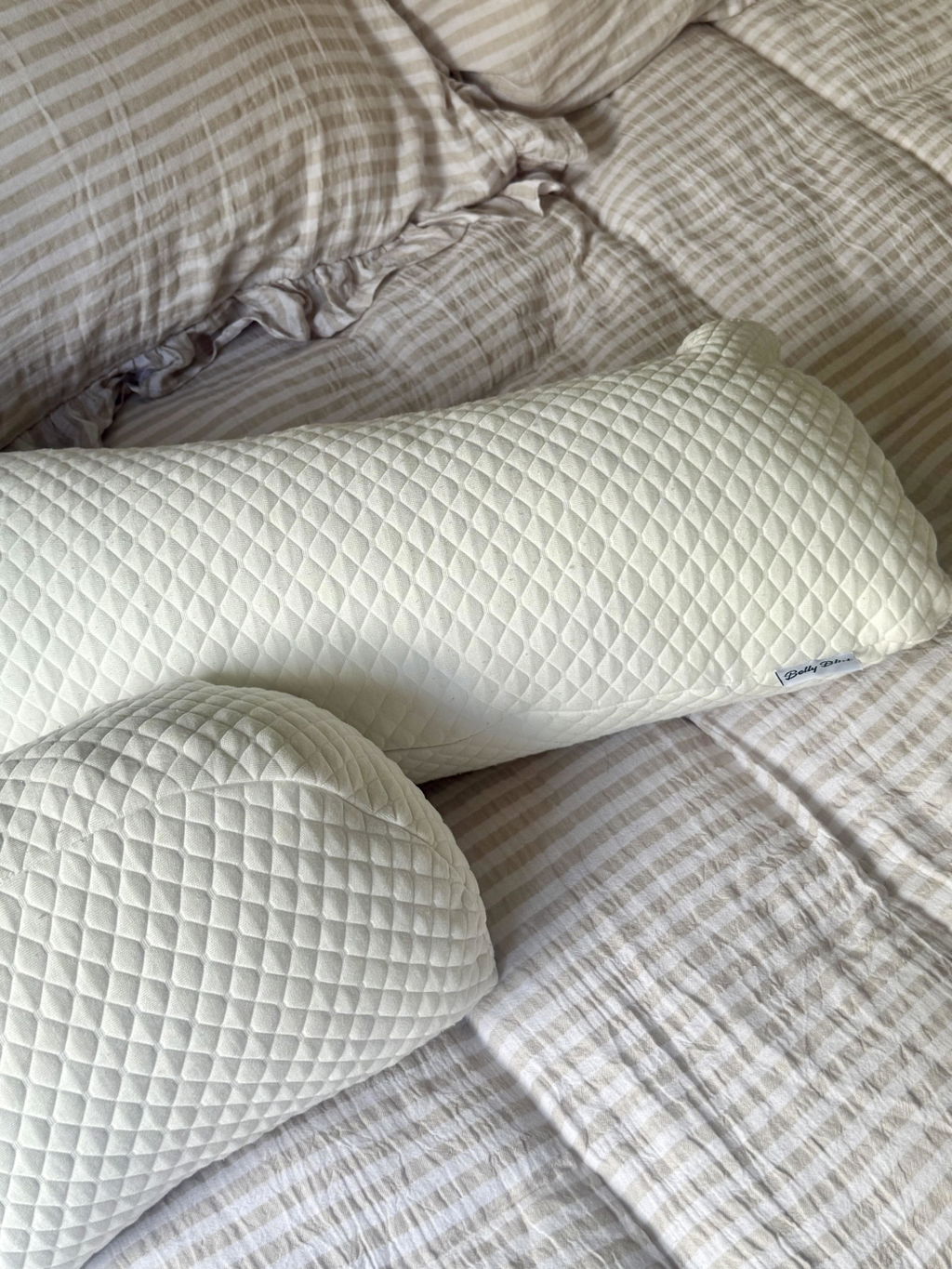
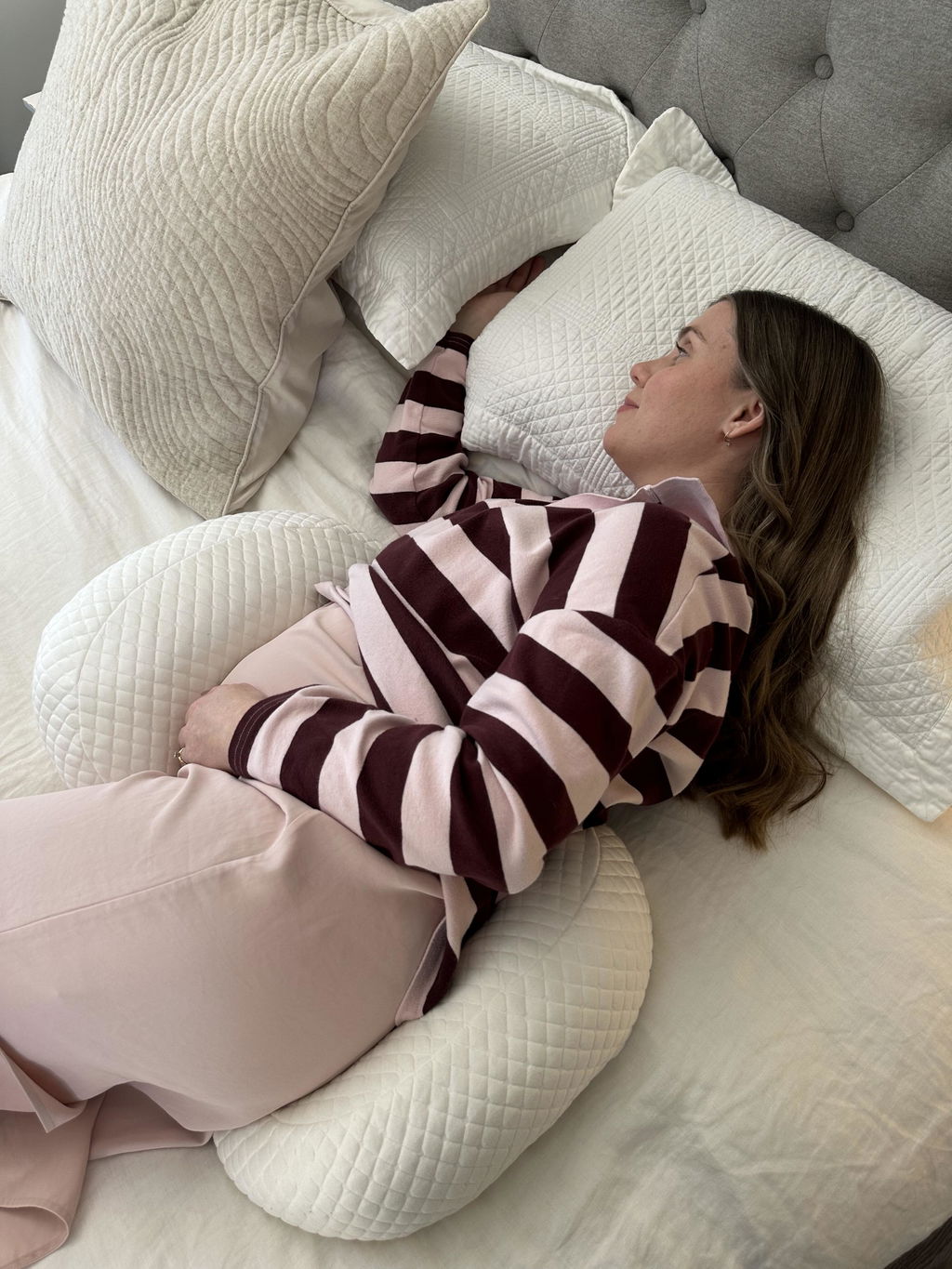
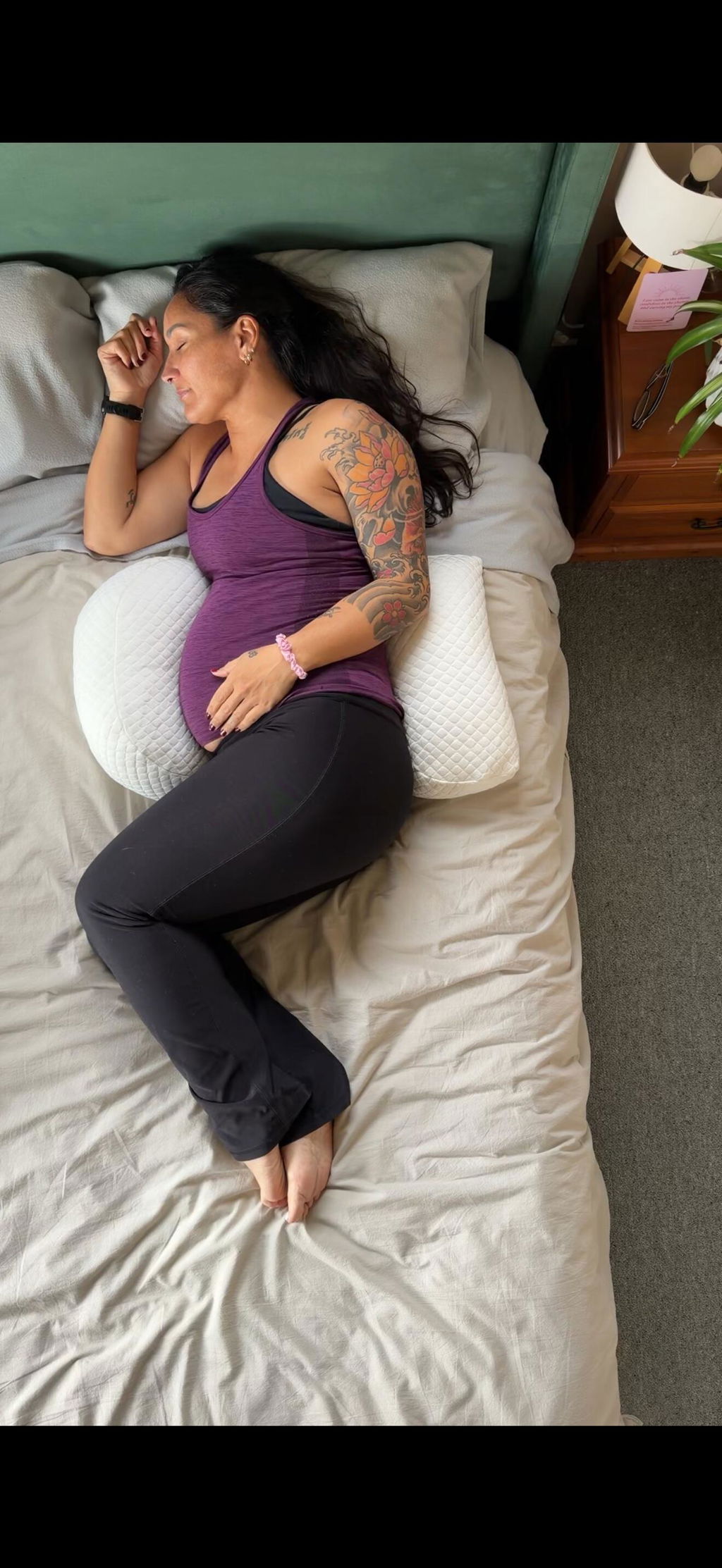
A pregnancy pillow can be particularly useful because it can support more than just your knees.
You can use it to:
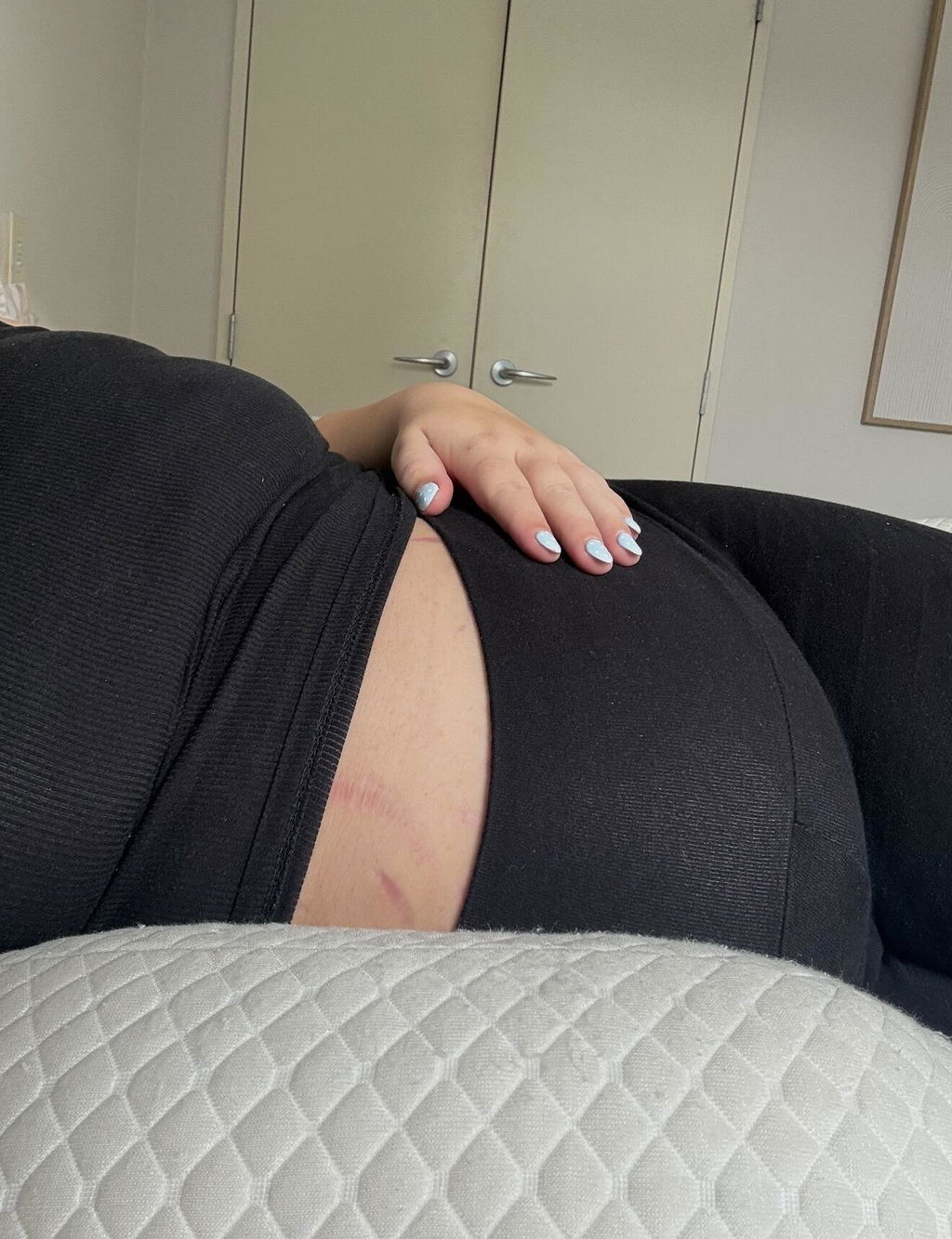
- Support your growing bump
- Give your top leg somewhere to rest
- Provide support behind your back
- Make side sleeping more comfortable
The goal isn't to force your body into one "perfect" position. It's simply to give your body some extra support where it needs it.
Don't forget about getting out of bed
If rolling over is painful, getting out of bed can be just as uncomfortable.
The same idea applies.
Rather than sitting straight up and twisting your body, try:
- Bend your knees.
- Keep your knees together.
- Roll onto your side as one unit.
- Bring your legs towards the edge of the bed.
- Use your arms to help push yourself up.
Go slowly and avoid movements that aggravate your pain.
If you're unsure about the best way to get in and out of bed with PGP, a pelvic health physiotherapist can show you techniques suited to your symptoms.
What else can help with pelvic pain at night?
Changing how you roll over is only one piece of the puzzle.
You might also find it helpful to:
Support your bump.
As your bump gets bigger, having something underneath it can make side sleeping more comfortable.
Put a pillow between your knees.
This gives your top leg some support and can make side sleeping feel less strained.
Change positions when you need to.
You don't have to stay on one side all night. If you're uncomfortable, change position using the technique above.
Avoid pushing through pain during the day.
If certain movements consistently aggravate your symptoms, speak to your healthcare provider about ways to modify them.
Give yourself time to get comfortable.
Sometimes the best thing you can do is slow down. Pregnancy is not the time to rush around trying to get everything done.
What about a pregnancy support belt?
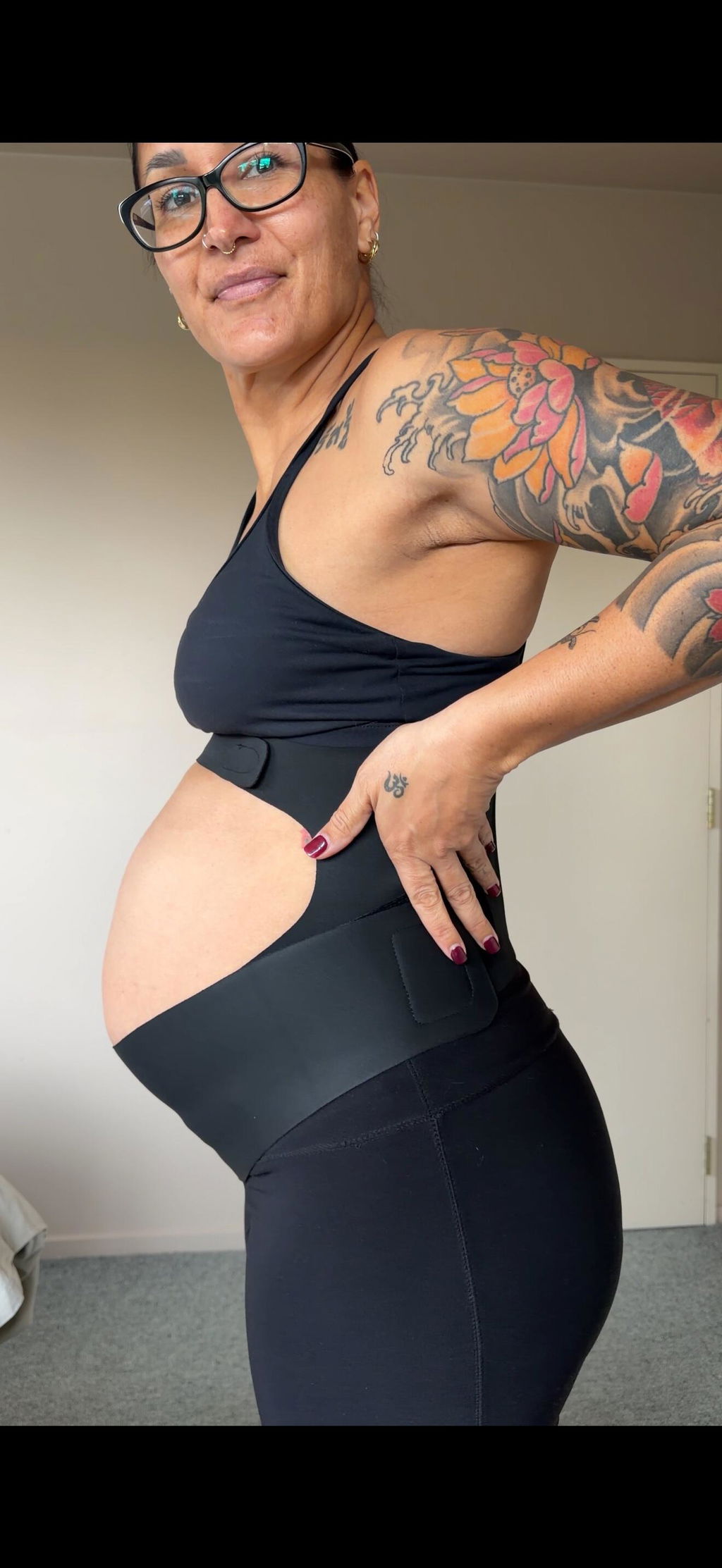
Some women find that a pregnancy support belt provides additional comfort during the day, particularly when they're standing or walking.
A support belt won't treat PGP, but it may provide a feeling of additional support around your bump and pelvis.
If you're considering one, it's worth getting advice from your midwife or physiotherapist about whether it's appropriate for your symptoms and how it should be fitted.

When should you see a physiotherapist?
You don't need to wait until pelvic pain becomes unbearable before asking for help.
It's worth speaking to your midwife or GP if:
- Your pain is affecting your sleep regularly
- You're struggling to walk comfortably
- Getting in and out of bed is becoming difficult
- You have pain going up stairs or getting dressed
- You're avoiding everyday activities because of pain
- Your symptoms are getting worse
A women's health or pelvic health physiotherapist can assess how you're moving and give you practical strategies to manage your symptoms.
In New Zealand, you can start by talking to your midwife or GP about the best option for you.
And remember, pelvic pain during pregnancy is common, but you don't have to simply put up with it.
Final thoughts
Rolling over in bed shouldn't feel like an event.
But when you're pregnant and dealing with pelvic pain, even that tiny movement can become something you dread.
The technique is simple: bend your knees, bring your heels towards your bottom, keep your knees together and move your body as one unit.
It might take a little practice, particularly when you're half asleep, but it's worth trying.
Adding some extra support with a pillow between your knees or a pregnancy pillow around your bump and back can also make side sleeping more comfortable.
And if your pain is persistent or affecting your everyday life, don't try to push through it alone. Your midwife, GP or a pelvic health physiotherapist can help.
You don't have to white knuckle your way through pregnancy.
Sometimes a few small changes can make those long nights a little easier.
Read more about how a pregnancy pillow can support your body during pregnancy →